
Choosing the right pickleball paddle India players actually enjoy can feel surprisingly confusing at first. You walk into a sports store, see carbon fiber and fiberglass options lined up together, and suddenly every paddle starts sounding “professional.”
If you’re new to the sport, read our complete What is Pickleball Guide to understand the rules and basics before choosing a paddle.
Whether you’re buying your first pickleball paddle India players recommend or upgrading your current gear, understanding paddle materials is the first step.
I’ve seen this happen a lot during weekend games here in Pune. Someone joins our apartment complex court with an old badminton grip and a big smile, then spends 20 minutes asking everyone which paddle to buy. Honestly, the confusion is normal. Both materials feel different on court, and the “best” one really depends on how you play. After trying both over months of sweaty evening matches and competitive rallies, here’s the simplest way to understand it.
As pickleball continues to grow globally, many players rely on USA Pickleball for official rules, paddle standards, and tournament information.
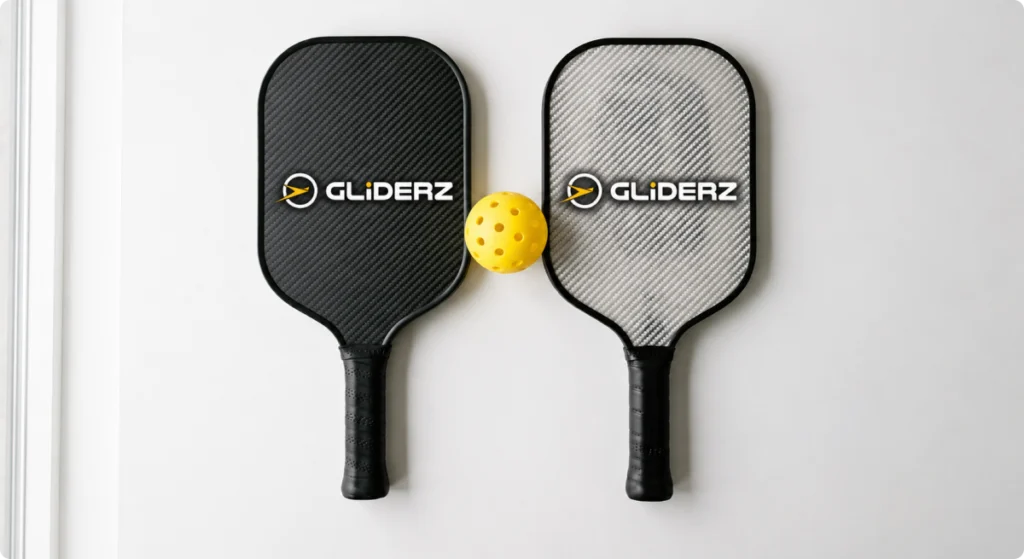
Carbon Fiber vs Fiberglass Pickleball Paddle India – Quick Comparison
You can add a simple table:
| Feature | Carbon Fiber | Fiberglass |
|---|---|---|
| Control | Excellent | Good |
| Power | Moderate | High |
| Spin | Excellent | Moderate |
| Beginner Friendly | Medium | High |
| Durability | High | Medium |
| Price in India | Higher | Affordable |
When comparing any pickleball paddle India buyers should focus on control, power, durability, and playing style rather than marketing claims.
How a Pickleball Paddle India Players Use Affects Playing Style
Explain how paddle material changes the feel of every shot.
Points to include:
- Carbon fiber gives a softer, controlled response
- Fiberglass creates a more explosive feel
- Difference during serves, volleys, and smashes
- Why touch players prefer control paddles
- Why aggressive players enjoy fiberglass power
- softer control response
- explosive fiberglass power
- volleys and smashes
Which Paddle Generates More Spin?
This is a high-interest topic for SEO and readers.
Points to cover:
- Carbon fiber usually offers better spin potential
- Textured surface grips the ball better
- Helpful for topspin serves and slicing
- Fiberglass can still generate spin, but less consistently
- Mention modern competitive pickleball focuses heavily on spin
Suggested keyword:
- carbon fiber pickleball paddle
Best Pickleball Paddle India for Outdoor Courts
Very useful for Indian audience targeting.
Points to include:
- Dusty outdoor courts affect paddle grip
- Heat and humidity can impact paddle feel
- Carbon fiber handles long-term outdoor use better
- Fiberglass feels more forgiving during casual outdoor play
- Mention apartment courts, badminton courts converted to pickleball, society games
Choosing the right pickleball paddle India outdoor players use regularly becomes especially important on rough apartment and society courts.
Weight Differences – Does It Matter?
Points:
- Lightweight paddles improve reaction speed
- Slightly heavier paddles add stability and power
- Carbon fiber often feels balanced
- Fiberglass can feel slightly head-heavy depending on design
- Best weight for beginners: around 7.8–8.2 oz
A lightweight pickleball paddle India beginners use can improve reaction speed and reduce arm fatigue during long matches.
Sound and Feel During Gameplay
Points:
- Fiberglass paddles sound louder and sharper
- Carbon fiber feels softer and quieter
- “Pop” sound vs muted control feel
- Funny apartment-court reference:
“Fiberglass smashes at 6 AM can make nearby uncles hate pickleball instantly.”
What Makes Carbon Fiber Paddles Different?
Carbon fiber paddles have a textured, gritty surface that’s woven from ultra-fine carbon strands. You can’t really see the weave with the naked eye, but your ball absolutely feels it.
Here’s the thing about that surface – it grips the ball for a fraction of a second longer. And that tiny moment is everything. It’s what gives you bite on your spin shots, precision on your dinks, and control when you’re trying to drop the ball softly at the kitchen line.
Think of it this way: playing with a carbon fiber paddle is like using a precise scalpel. A fiberglass paddle? More like a hammer. Both get the job done, but for very different purposes.
Carbon fiber paddles tend to be stiffer. Less flex in the face means the ball doesn’t “trampoline” off the surface – it responds exactly how you hit it. That’s brilliant for experienced players who want to place the ball rather than just hit it hard.
If your game involves a lot of dinking, 3rd shot drops, reset shots, or aggressive spin serves – carbon fiber is your friend. Players who’ve transitioned from sports like table tennis often fall in love with carbon fiber paddles immediately, because the touch and spin game feels very familiar.
The trade-off? Less forgiveness. If you mishit on a carbon fiber paddle, you’ll feel it. It rewards skill and punishes laziness. Great paddle, but it does expect something from you in return.
What About Fiberglass Paddles?
Fiberglass paddles have a softer, more flexible face. The material is woven glass fibres, and while it doesn’t sound as glamorous as carbon fiber, don’t underestimate it.
That flex is actually a feature, not a bug. When the ball hits a fiberglass surface, there’s a small amount of give – which launches the ball with more natural power. You don’t have to swing as hard to generate pace. For beginners, that’s a massive advantage. You’re still figuring out footwork, positioning, and shot selection – the last thing you need is a paddle that demands precision you haven’t built yet.
If you’re coming from badminton or tennis, fiberglass paddles will feel more intuitive. The power and feel is closer to what you’re used to – a bit of “pop” off the face, less of that stiff, technical response that carbon gives you.
Fiberglass paddles also tend to be more forgiving on off-centre hits. If you catch the ball slightly on the edge of your sweet spot (which happens a lot when you’re new), a fiberglass paddle still sends it in a reasonable direction. A carbon fiber paddle would punish that same shot.
Beginners, recreational players, power hitters, and anyone just getting into pickleball – fiberglass is a genuinely excellent choice. It’s accessible, it plays well, and it gives you time to develop your game before you need to think about upgrading.
Head-to-Head: Carbon Fiber vs Fiberglass
Let’s talk about the real stuff – price, durability, and who each paddle actually suits.
Price in India: Fiberglass paddles are generally more affordable, typically ranging from ₹1,500 to ₹4,000 for decent quality. Carbon fiber paddles – especially those using premium Toray carbon – usually start around ₹3,500 and can go up to ₹8,000 or more. If you’re buying your first paddle and aren’t sure how long you’ll stick with the sport, fiberglass is the smarter financial bet. If you already know you’re serious, the carbon fiber investment pays off quickly.
Durability: Both materials are quite durable under normal play. However, carbon fiber surfaces can occasionally delaminate or lose their grit over time if you’re playing on rough outdoor courts – something to keep in mind if you play outdoors regularly. Fiberglass tends to hold up a little more consistently across different surfaces.
Best use case: Fiberglass for beginners, recreational weekend games, and power-focused players. Carbon fiber for intermediate to advanced players who want to level up their control game, improve spin, and compete seriously.
Skill level: This is probably the most important filter. If you’re picking up a paddle for the first time, exploring the best pickleball paddles available in India – fiberglass gives you a more enjoyable learning experience. Once you’ve got 6–12 months under your belt and you know your playing style, that’s when carbon fiber starts making real sense.
The best pickleball paddle India players choose ultimately depends on skill level, court conditions, and preferred playing style.
If you’d like to learn more about paddle materials, weight, grip size, and playing styles, check out this Pickleball Central Paddle Guide . It explains how paddle construction affects power, control, forgiveness, and spin.
Frequently Asked Questions
Q1: Which pickleball paddle India beginners should buy?
For most beginners, a fiberglass paddle is the better starting point. It’s forgiving, gives you natural power without demanding perfect technique, and is easier on your wallet while you’re still figuring out if pickleball is your thing. Once you’ve played regularly for a few months and have a feel for your game – whether you prefer control or power – you’ll have much better clarity on whether to stick with fiberglass or switch to carbon fiber.
Q2: Is a carbon fiber pickleball paddle India players use worth the price?If you’re playing 2–3 times a week and genuinely working on your game, yes – carbon fiber is absolutely worth it. The improvement in spin control, dink precision, and touch shots is noticeable once you have the fundamentals down. But if you’re playing once a month for fun, the price difference isn’t justified. Buy a good fiberglass paddle, enjoy your game, and upgrade when pickleball starts taking over your weekends (it will).
Q3: Can a fiberglass pickleball paddle be used in tournaments?
Absolutely – many competitive players use fiberglass paddles, especially power-focused players who prefer the extra pop in their drives. There are no “rules” that say competitive means carbon only. That said, at higher levels of play, most players tend to gravitate toward carbon fiber for the spin and control advantages. If you’re playing in local club tournaments or state-level events, a quality fiberglass paddle is still very much a competitive option.
Q4: Which paddle does GLIDERZ recommend for Indian playing conditions?
Indian courts – particularly outdoor ones in apartment complexes and parks – can be rough, sun-baked, and hard on equipment. GLIDERZ recommends their carbon fiber paddle range for players with some experience, built specifically for Indian playing conditions: durable enough for rough surfaces, grippy enough for spin in humid weather. For beginners, their fiberglass options offer excellent value and playability. Check out the GLIDERZ pickleball paddle range to see what fits your game and budget.
If you want to understand paddle construction and materials in more detail, this helpful guide from Pickleball Central’s pickleball paddle buying guide explains how different paddle surfaces affect control, power, and spin for different playing styles.
At the end of the day, the “best” paddle is the one that matches where you are in your pickleball journey – not the most expensive one, and definitely not the one the internet is hyping this month.
Start with what suits your level, play a lot, and let your game tell you what it needs next. That’s genuinely the best paddle advice anyone can give you.
👉 Looking to start playing? Explore GLIDERZ Pickleball paddles – Made in India for Indian players.