
Pickleball is one of the fastest-growing sports in the country right now, and Pickleball India is seeing new courts, clubs, and academies pop up in almost every city. As more players pick up a paddle for the first time, one thing becomes clear very quickly: matches are won and lost on fundamentals, and fundamentals are built through practice. That’s where training balls for pickleball come in.
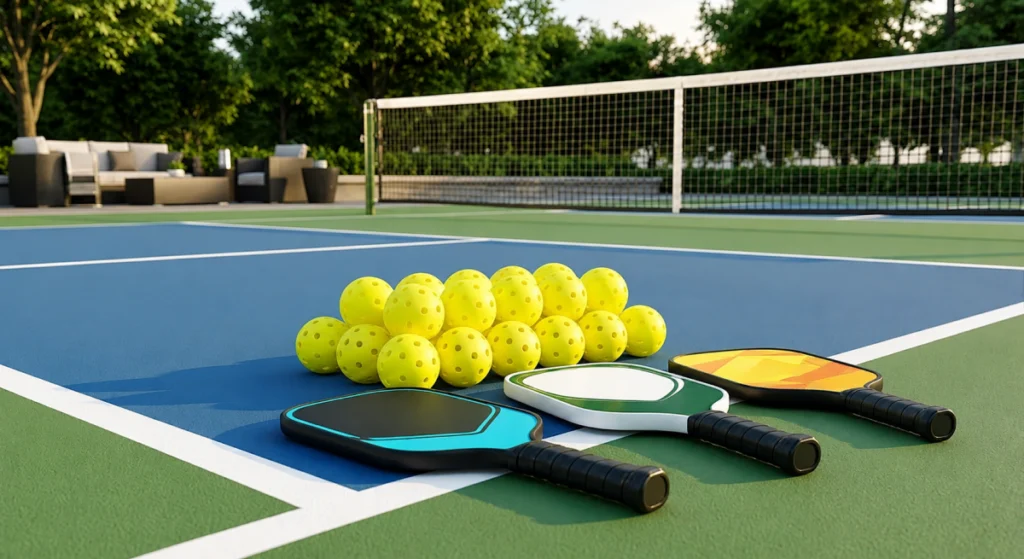
Whether you’re a beginner learning to control your shots or a coach running drills for a full academy, the ball you practice with matters just as much as the paddle you swing. A good practice ball helps you build muscle memory, sharpen reflexes, and develop the kind of consistency that shows up when it counts. But not all balls are created equal – a tournament ball is engineered for official match conditions, while a dedicated training ball is built to survive hours of repetitive drilling without losing its bounce or shape.
This is exactly the gap that GLIDERZ set out to fill. As a trusted Indian manufacturer, GLIDERZ designs pickleball equipment specifically for Indian courts, Indian weather, and Indian playing conditions – so players, coaches, and clubs don’t have to compromise on quality just because they’re training instead of competing. In this guide, we’ll break down everything you need to know about training balls, how they differ from tournament balls, and how the right equipment can transform your practice sessions.
Why Training Balls Are Essential for Pickleball Skill Development
Improvement in pickleball doesn’t happen by accident. It happens through repetition – the same dink, the same third-shot drop, the same volley, practiced over and over until it becomes second nature. This is why regular practice with the right training balls for pickleball is non-negotiable for anyone serious about the sport.
Here’s what consistent practice with quality balls actually does for your game:
- Builds consistency – Repeating the same shot with a ball that behaves predictably helps you groove a reliable technique instead of adapting to unpredictable bounces.
- Improves hand-eye coordination – Tracking a ball through hundreds of reps sharpens the connection between your eyes, hands, and paddle.
- Sharpens control and accuracy – Placing balls precisely during drills translates directly into placing shots precisely during matches.
- Speeds up reaction time – Fast-paced drilling trains your body to respond before your brain has fully processed the shot.
- Strengthens footwork – Chasing and setting up for repeated shots naturally improves court movement and positioning.
- Builds match confidence – Players who’ve drilled a shot hundreds of times execute it with far less hesitation under pressure.
None of this works if the ball itself is inconsistent. A cracked, warped, or poorly balanced practice ball can actually teach you the wrong habits, since you end up compensating for bad bounces instead of building clean technique. This is why every player – from weekend beginners to competitive athletes – should train with balls that are purpose-built for the job, not leftover tournament balls that have lost their shape.
Different Types of Pickleball Training Balls and Practice Equipment
Not every ball or piece of practice equipment serves the same purpose. Understanding the differences helps you choose the right setup for your goals, whether you’re practicing solo, drilling with a partner, or running a full academy session.
Tournament Ball
A tournament ball is designed for official match play and built to strict specifications for weight, size, and bounce consistency, following standards set by organizations like USA Pickleball.
These balls need to perform identically from the first serve to match point, which means they’re manufactured with tighter tolerances and more durable materials.
Key features include:
- Official-standard weight and hole pattern for consistent flight
- Predictable, uniform bounce across every surface
- Built to withstand competitive rally speeds
- Used for final match preparation before tournaments
Because of their precision manufacturing, tournament balls are excellent for simulating real match conditions in the final stages of preparation – but using them exclusively for daily drilling can wear them out faster than necessary.
Practice Ball
A practice ball is designed for exactly what its name suggests: daily, high-volume practice. These balls are built to be cost-effective and long-lasting, so you can drill for hours without worrying about replacing your stock every week.
Benefits include:
- Affordable enough for daily use without breaking the budget
- Durable construction that holds up to repeated impact
- Reliable bounce for skill-building drills
- Ideal for both solo practice and group coaching sessions
For most players, a rotation of good practice balls for everyday drilling and tournament balls for final prep is the smartest approach.
Multiball Practice
Multiball practice is a training method where a coach or partner feeds a continuous stream of balls to a player, rather than playing out full points. This approach maximizes the number of reps a player gets in a single session.
Advantages of multiball practice:
- Far more repetitions than standard rally-based practice
- Ideal for coach-led, structured sessions
- Keeps the drilling continuous, with minimal downtime between shots
- Accelerates muscle memory development for specific shots
Because multiball sessions involve rapid, repeated feeding, they naturally use up a higher volume of balls – which is exactly why durable, budget-friendly practice balls are so important here.
MultiBall Drills
MultiBall drills are the specific exercises built around the multiball feeding method. They target individual skills in isolation, so players can focus entirely on one movement at a time. Popular drill types include:
- Dinking drills – Repeated soft shots at the kitchen line to build touch and patience
- Volley drills – Quick-fire net exchanges to sharpen reflexes at close range
- Third-shot drop drills – Repetition of the crucial transition shot from baseline to kitchen
- Footwork drills – Movement patterns paired with ball feeds to improve court positioning
- Reflex drills – Fast, close-range feeds that train quick-hands reactions
- Accuracy drills – Target-based feeding to improve shot placement
- Speed drills -x` Rapid successive feeds that build stamina and quick decision-making
Coaches and academies often build entire training curriculums around these drills because they isolate specific weaknesses and turn them into strengths.
PickleBall Ball Thrower
A PickleBall Ball Thrower is a compact device designed to feed balls automatically, allowing players to practice solo without needing a partner or coach on the other side of the net. This is especially useful for players who want to drill outside of scheduled coaching sessions.
Benefits include:
- Enables focused solo practice at any time
- Adjustable speed settings to match skill level
- Adjustable spin for more advanced shot variety
- Consistent, repeatable ball feeding for cleaner reps
- Faster reaction-time development through repeated exposure
For players without regular access to a hitting partner, a ball thrower can be one of the most valuable additions to their training setup.
Ball Throwing Machine
A Ball Throwing Machine takes automated feeding a step further, typically offering higher capacity and more advanced settings suited for academy-level training. These machines are built for high-volume, structured sessions.
Common use cases:
- Academy and club-level training programs
- Professional coaching environments
- High-volume practice sessions with minimal manual feeding
- Simulating match-like ball patterns for advanced players
Academies that run multiple sessions per day rely on these machines to keep training consistent even when coaching staff is limited.
PickleBall Launcher
A PickleBall Launcher is designed for more advanced, automated training setups where precision and customization matter most. These devices are popular among serious players and coaches who want granular control over every feed.
Key advantages:
- Fully automated training without manual ball feeding
- Precision-targeted feeds for specific drill patterns
- Customizable practice programs for different skill goals
- Supports advanced player development at a competitive level
For players progressing toward tournament-level play, a launcher can simulate the pace and placement variety they’ll face in real matches.
PickleBall Bulk Order
For clubs, schools, academies, tournament organizers, retailers, and sports dealers, a PickleBall Bulk Order is often the most practical way to keep operations running smoothly. Buying in bulk ensures every player on the court is training with the same consistent product.
What to look for in a bulk supplier:
- Competitive bulk pricing for large quantities
- Consistent quality across every unit in the order
- Reliable, ongoing supply for recurring training needs
- Fast delivery timelines to avoid disruptions in training schedules
- Custom branding options, where available, for clubs and academies that want their own identity on the equipment
Organizations that train large groups of players regularly benefit significantly from setting up a dependable bulk supply relationship rather than repeatedly placing small individual orders.
How to Choose the Right Training Balls for Your Skill Level
Not every player needs the same type of ball. Matching your equipment to your skill level makes practice more effective and helps you progress faster.
Beginners should look for:
- A softer feel that’s more forgiving on contact
- Balls that offer better control at slower swing speeds
- Consistent bounce that builds confidence early on
Intermediate players benefit from:
- Balls suited for spin practice as they develop more advanced shots
- Equipment that supports faster-paced drills
- Balls that closely mimic match conditions for realistic preparation
Advanced players need:
- Tournament-level performance balls for high-stakes practice
- Balls that hold up during high-speed rallies
- Equipment suited for professional-level training routines
Beyond skill level, a few other factors matter when choosing training balls:
| Factor | Why It Matters |
|---|---|
| Material quality | Affects durability and consistent flight |
| Durability | Determines how many sessions a ball can withstand |
| Bounce consistency | Impacts the reliability of your practice reps |
| Indoor vs outdoor use | Outdoor balls need more wind resistance and durability |
| Hole design | Influences flight stability and spin potential |
| Weather resistance | Crucial for humid or high-heat Indian conditions |
| Playing conditions in India | Court surfaces and climate vary widely across regions |
Choosing balls suited to your local playing conditions genuinely improves performance on every Pickleball Court India, since a ball that behaves inconsistently in heat or humidity can undo hours of good practice. If you’re new to the sport altogether, it’s worth taking a step back to learn more about what is Pickleball before diving into equipment decisions – understanding the game’s fundamentals makes it much easier to pick the right gear.
Why GLIDERZ Training Balls Are Trusted Across India
GLIDERZ has built its reputation by focusing on what actually matters to players, coaches, and academies: consistency, durability, and performance that holds up session after session.
Here’s what sets GLIDERZ apart:
- Premium materials engineered for long-term durability under repeated impact
- Precision manufacturing that ensures every ball performs the same way, rep after rep
- Consistent bounce across different court surfaces and conditions
- Built for Indian weather, from humid coastal cities to drier inland regions
- Trusted by clubs, academies, schools, and coaches who need reliable equipment at scale
- Suitable for both tournaments and daily practice, giving players flexibility without switching brands
- Available for PickleBall Bulk Order, making it easy for organizations to equip entire programs
- Reliable nationwide delivery, so clubs and players across India get consistent access to quality equipment
Whether you’re a solo player working on your dinks at home or an academy running daily multiball sessions for dozens of students, having equipment you can count on makes every practice session more productive. If you’re ready to upgrade your training setup, explore our premium pickleball products and see how GLIDERZ can fit into your routine – or contact GLIDERZ for product inquiries and bulk orders if you’re outfitting a club, school, or academy.
Frequently Asked Questions
1. What are pickleball training balls? Pickleball training balls are balls specifically designed for practice sessions rather than official matches. They’re built to be durable and cost-effective, so players and coaches can use them repeatedly during drills, multiball sessions, and skill-building exercises without worrying about frequent replacement. Unlike tournament balls, which prioritize exact match-standard specifications, training balls prioritize longevity and value for high-volume use. They still offer reliable bounce and flight characteristics, making them suitable for developing consistency, accuracy, and reaction time. Most serious players and academies keep a dedicated stock of training balls separate from their match-day tournament balls.
2. What is the difference between a Practice Ball and a Tournament Ball? A practice ball is built for everyday drilling – it’s durable, affordable, and designed to withstand repeated impact over many sessions. A tournament ball, on the other hand, is manufactured to strict official specifications for weight, bounce, and flight consistency, since it needs to perform identically throughout a competitive match. Practice balls are ideal for daily skill-building, while tournament balls are best reserved for final match preparation and actual competition. Using tournament balls exclusively for practice can wear them out faster and isn’t the most cost-effective approach for regular training.
3. Are training balls suitable for beginners? Yes, training balls are actually ideal for beginners. They typically offer a more forgiving feel and consistent bounce, which helps new players build fundamental skills like control and hand-eye coordination without the added pressure of match-specification equipment. Beginners benefit from practicing with balls that behave predictably, since it allows them to focus on developing clean technique rather than compensating for erratic bounces. As skills progress, players can gradually shift toward balls designed for faster drills and more advanced spin work.
4. How long do pickleball training balls last? The lifespan of a training ball depends on usage frequency, playing surface, and build quality. High-quality practice balls made from durable materials can last through dozens of practice sessions, especially when used on well-maintained courts. Outdoor use, rough surfaces, and high-volume drilling like multiball practice tend to wear balls out faster than casual indoor practice. Investing in well-manufactured balls, like those from trusted Indian manufacturers, generally means fewer replacements and better long-term value for regular players, coaches, and academies.
5. What are MultiBall Drills? MultiBall drills are structured practice exercises built around continuous ball feeding, allowing players to get significantly more repetitions than standard point-based play. Common examples include dinking drills, volley drills, third-shot drop drills, footwork drills, and reflex or accuracy-focused drills. Because a coach or partner feeds balls in rapid succession, players can isolate a single skill and repeat it dozens of times in a short period. This repetition is one of the fastest ways to build muscle memory and correct technical flaws in a controlled setting.
6. Is a PickleBall Ball Thrower worth buying? For players who often practice alone or don’t have consistent access to a coach or hitting partner, a PickleBall Ball Thrower can be a genuinely valuable investment. It allows for focused solo practice with adjustable speed and spin settings, giving players control over the difficulty and type of reps they’re working on. Instead of relying on someone else’s availability, players can schedule practice on their own time and target specific weaknesses. Over time, the consistent repetition it enables can meaningfully speed up skill development.
7. What is a Ball Throwing Machine used for? A Ball Throwing Machine is typically used in academy and professional coaching settings where high-volume, structured practice is the norm. These machines can feed balls consistently for extended periods, which is especially useful when a single coach is training multiple players or running large group sessions. They help simulate different ball speeds and patterns, allowing coaches to design more advanced, match-like drills. Academies and clubs often rely on these machines to keep training consistent even during busy schedules.
8. How does a PickleBall Launcher improve practice? A PickleBall Launcher offers a higher level of automation and precision compared to standard ball throwers, allowing for highly customizable practice programs. Players and coaches can fine-tune feed patterns, speed, and placement to target very specific skills, such as reacting to fast cross-court shots or handling varied spin. This level of control is particularly useful for advanced and competitive players who need to simulate realistic match scenarios during solo or coached training. It essentially allows for a more tailored, repeatable training experience.
9. Where can I buy training balls in India? Training balls are increasingly available through specialized Indian pickleball equipment manufacturers, sporting goods retailers, and online stores as the sport grows in popularity. GLIDERZ, as a dedicated Indian manufacturer, offers training and practice balls designed specifically for local weather and court conditions, along with nationwide delivery. When buying training balls in India, it’s worth prioritizing brands that understand regional playing conditions, since imported balls aren’t always optimized for local humidity and temperature variations.
10. Can clubs place a PickleBall Bulk Order? Yes, clubs, schools, academies, tournament organizers, retailers, and sports dealers can typically place bulk orders for pickleball training and practice balls. Bulk ordering usually comes with benefits like discounted pricing, consistent product quality across the entire order, and more reliable long-term supply arrangements. Many manufacturers, including GLIDERZ, also offer fast delivery and custom branding options for larger orders, which is especially useful for organizations equipping multiple courts or running large-scale training programs.
👉 Looking to start? Explore GLIDERZ Pickleball Balls – Made in India for Indian players.