
Essential Pickleball Paddle Maintenance Tips for Longer Paddle Life
Most players spend weeks comparing paddle weight, grip size, and core material before making a purchase. Then, once the paddle actually arrives, it gets tossed into a kit bag, left in a car boot after a Sunday session, or wiped down with whatever cloth happens to be lying around. Pickleball paddle maintenance rarely gets the same attention as the buying decision, even though it has a direct bearing on how the paddle performs over time.
This isn’t about being obsessive over your equipment. It’s about a few simple habits that take less than five minutes after each session. Whether you’re playing socially at your local club or training for tournaments, understanding how to clean, store, and protect your paddle can help you get consistent performance out of it for longer. These essential pickleball paddle maintenance tips walk through what actually matters, without the exaggerated claims you’ll often find online.
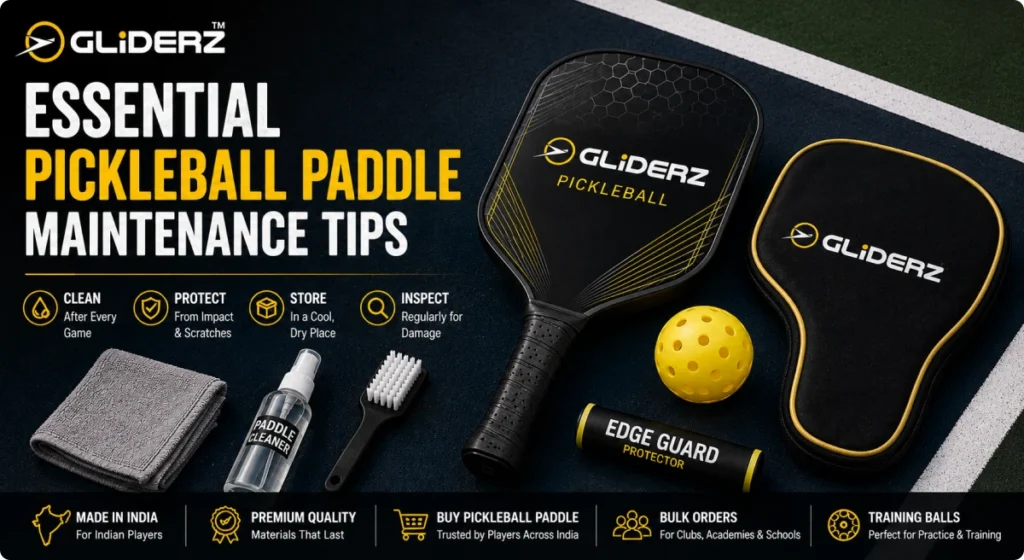
Why Pickleball Paddle Maintenance Matters
A pickleball paddle goes through a fair amount of stress during regular play. Every shot transfers force through the paddle face, the edge guard absorbs contact from mishits, and the handle takes on sweat and grip pressure over the course of a match. None of this is dramatic on its own, but it adds up.
Dirt and dust settle into the paddle surface, especially the textured face that many players rely on for spin. Sweat and moisture can seep into the edges if a paddle isn’t wiped down regularly. Heat causes materials to expand slightly, and repeated impacts – even small ones from ground contact or accidental drops – can weaken the edge guard or the honeycomb core underneath the surface over time.
This is exactly why regular paddle care matters, whether you play twice a week or every day. Recreational players sometimes assume maintenance is only necessary for competitive athletes, but a paddle used casually on outdoor courts can pick up just as much dust and grime as one used in structured training. Both groups benefit from a quick visual inspection every few sessions, just to catch small issues before they become bigger ones.
This becomes even more relevant for players in India, where a large share of pickleball is played on outdoor courts. Between dust, direct sun, and the humidity that comes with certain seasons, paddles here are exposed to a slightly different set of conditions compared to indoor-only setups. None of this means a paddle will fail quickly, but it does mean a bit of routine care goes a long way in keeping the paddle in good playing condition.
If you’re still getting familiar with the sport itself, it helps to understand what is pickleball and how the equipment is meant to be used, since that context makes maintenance habits feel a lot more intuitive.
How to Clean a Pickleball Paddle Properly
Cleaning a paddle isn’t complicated, but there is a right way to do it, and a few things worth avoiding. If you’re wondering how to clean a pickleball paddle without damaging the surface texture or the edge guard, here’s a simple routine that works for most paddles.
Right after your session
As soon as you’re done playing, take a moment to wipe the paddle face with a dry or slightly damp microfiber cloth. This removes surface dust, court grit, and sweat before it has a chance to settle into the texture of the paddle. It’s a small step, but doing it consistently makes a noticeable difference over weeks of play.
Removing dirt from the paddle face
For paddles with a textured surface, dirt can get lodged in the grit pattern, especially after playing on outdoor courts with looser surface dust. A soft, slightly damp cloth works best here. Wipe in gentle, circular motions rather than pressing hard or scrubbing aggressively, since textured surfaces are designed to create friction for spin, and rough scrubbing can wear that texture down faster than normal play would.
Cleaning around the edge guard
The edge guard tends to collect grime from ground contact and occasional scrapes. Run your cloth carefully along the edge, checking for any dirt buildup in the seam where the edge guard meets the paddle face. This is also a good moment to visually check for any small lifts or gaps in the edge guard itself.
What to avoid
A few things can do more harm than good when cleaning a paddle:
- Don’t soak the paddle in water or hold it under a running tap. Moisture can seep into the core material through the edges, which isn’t ideal for long-term performance.
- Avoid harsh chemicals, alcohol-based cleaners, or household cleaning sprays. These can break down the paddle’s surface coating faster than regular wear.
- Skip abrasive materials like scouring pads or rough sponges. They can flatten the surface texture that helps with ball control and spin.
- Don’t scrub aggressively even with a soft cloth. Gentle, consistent wiping is more effective than forceful cleaning.
A quick wipe-down after each session, plus a slightly more thorough clean once a week if you’re playing often, is usually enough for most players. There’s no need for elaborate cleaning kits or specialised products.
Protect Your Paddle From Common Damage
Pickleball paddle protection is less about the cleaning routine and more about everyday habits during play and transport. Most paddle damage doesn’t happen from normal rallies – it happens from avoidable contact.
Ground contact and drops
It’s common for players to tap their paddle on the court between points, or set it down on the ground during a break. Over time, this kind of repeated ground contact can dull the edge guard and, in some cases, lead to small chips on the paddle face. Try to place your paddle down gently, or better yet, keep it in your hand or a bag pocket during breaks rather than resting it directly on concrete.
Accidental drops are harder to avoid entirely, but they’re worth being mindful of, especially on hard outdoor court surfaces. A paddle dropped from waist height onto asphalt is far more likely to develop a hairline crack than one dropped onto a cushioned indoor court.
Contact with fences, posts, and hard surfaces
Some players have a habit of tapping their paddle against the net post or the fence out of frustration or simply out of habit between games. This is one of the more common causes of edge guard damage that people don’t immediately connect to their own actions. It’s worth breaking this habit early, since repeated impact in the same spot weakens that section of the edge guard over time.
Regular visual checks
Every few sessions, take thirty seconds to look over your paddle:
- Run a finger along the edge guard to feel for any lifting, cracking, or looseness
- Check the face for hairline cracks, especially near the edges where impact stress concentrates
- Listen for any change in sound when you tap the paddle – a dull or hollow rattle can indicate an internal issue with the core
- Check the handle for looseness at the point where it meets the paddle face
Using a paddle cover for transport
If you’re travelling between courts, carrying your paddle to a club, or heading to a tournament, a paddle cover or padded sleeve is a simple way to prevent scuffs from other equipment bouncing around in your bag. This matters more than it seems, since paddles often get tossed into the same bag as water bottles, shoes, and other gear that can scratch the surface during transit.
For players who travel frequently between different pickleball courts in India, whether for league matches or casual games with different groups, a cover also protects the paddle from dust exposure during the commute itself, particularly if you’re travelling by two-wheeler or public transport.
How to Store a Pickleball Paddle Correctly
Pickleball paddle storage is one of the most overlooked parts of equipment care, mainly because it doesn’t feel like an active task. But where and how you store your paddle between sessions affects its condition just as much as how you use it on court.
Keep it dry and away from direct heat
Store your paddle somewhere dry, away from direct sunlight and excessive heat. Prolonged heat exposure can cause subtle changes in the paddle’s materials over time, particularly for paddles with polymer or polypropylene cores. Leaving a paddle inside a car parked in direct sun for several hours, especially during peak summer months, isn’t ideal for this reason. If you’re stopping somewhere on the way to or from a match, it’s worth taking the paddle out of the car with you rather than leaving it on the dashboard or back seat.
Avoid damp or humid storage spots
On the other end, extremely damp or humid storage conditions aren’t great either. Storing a paddle in a closed bag that’s still damp from sweat, or in a space with poor ventilation, can lead to a faint musty smell developing over time and isn’t good for the materials. Letting your paddle air out for a bit after a session, before packing it away fully, helps with this.
Use a cover, especially with multiple paddles
If you own more than one paddle, or if you’re storing paddles for a group – say, for a family or a small coaching setup – keep them in individual covers or separated within your bag rather than letting paddle faces rub directly against each other. This simple step prevents surface scratches that build up gradually without you noticing.
Travel and tournament storage
When travelling for tournaments, pack your paddle in a padded compartment if your bag has one, and avoid placing heavy items like water bottles or shoes directly on top of it. If you’re flying, carrying the paddle in your cabin bag rather than checked luggage reduces the risk of impact damage during handling.
None of this requires special equipment or a dedicated storage setup. A cool, dry corner of a cupboard or a padded bag pocket, kept out of direct sun, works fine for most players.
When Should You Replace Your Pickleball Paddle?
Every paddle eventually reaches a point where replacement makes more sense than continued use. Knowing what to look for helps you make that call without second-guessing every scuff mark.
Signs that typically indicate real damage:
- Visible cracks on the paddle face, particularly ones that run across the surface rather than sitting on top of it
- Structural damage where the paddle flexes unusually or feels different when you hold it
- A loose, lifting, or partially detached edge guard that no longer sits flush against the paddle
- Handle problems, such as looseness at the connection point or a grip that’s come apart at the base
- Significant surface damage that affects a large portion of the hitting area, not just a small chip
- A noticeable change in how the ball comes off the paddle, such as reduced control or an odd sound on contact
- Repeated impact damage in the same area, which can weaken that section even if it isn’t visibly cracked yet
What doesn’t necessarily mean replacement
Normal cosmetic marks – small scuffs, faded paint, minor surface scratches from regular play – don’t automatically mean your paddle needs replacing. Most paddles pick up some visual wear within the first few months of regular use, and this is expected rather than a sign of failure. The key difference is whether the damage affects structure and performance, or whether it’s purely surface-level.
If you do notice genuine structural issues, or if a repair simply isn’t practical for the type of damage involved, it’s usually more sensible to invest in a new paddle rather than continuing to play with compromised equipment. This is also a good time to reassess what you actually need from a paddle, rather than replacing like-for-like out of habit.
When looking at a best pickleball paddle in India option, it helps to think about your playing style, the paddle material, weight, shape, grip size, and the balance between control and power you’re after, rather than choosing based purely on what’s popular or heavily marketed. A paddle that works well for a power player with a longer handle might not suit someone who relies more on soft game and touch shots near the kitchen line.
Gliderz manufactures paddles using materials such as carbon fiber and fiberglass, built around a polypropylene honeycomb core, and offers a range of pickleball paddles designed with different playing styles in mind. Carbon fiber and fiberglass paddle faces do behave a little differently in terms of feel and response, so it’s worth understanding which suits your game before making a switch. If you’re upgrading after retiring an older paddle, this is a good point to think through what worked and what didn’t with your previous equipment.
For reference on general paddle specifications and equipment guidelines, USA Pickleball maintains detailed equipment standards that are worth a look if you want a clearer sense of what’s considered standard across the sport.
Frequently Asked Questions About Pickleball Paddle Maintenance
How often should I clean my pickleball paddle? A quick wipe-down after every session is ideal, especially if you’re playing outdoors where dust and grit build up faster. A more thorough clean of the paddle face and edge guard once a week, if you’re playing frequently, is usually sufficient for most players without being excessive.
Can I wash a pickleball paddle with water? It’s best to avoid soaking the paddle or holding it under running water. A slightly damp microfiber cloth is enough to clean the surface effectively. Excess moisture around the edges can affect the core material over time, so keeping cleaning light and controlled is the safer approach.
How should I store a pickleball paddle? Store it in a cool, dry place away from direct sunlight and excessive heat. Using a padded cover helps prevent scratches, especially if it’s kept alongside other gear in a bag. Avoid damp storage spots, and let the paddle air out briefly after a sweaty session before packing it away.
Can heat damage a pickleball paddle? Prolonged exposure to high heat, such as leaving a paddle inside a car parked in direct sun for hours, isn’t ideal for the materials over time. Occasional short exposure isn’t something to worry about, but making it a habit to keep your paddle out of extreme heat is a sensible precaution.
How do I protect my pickleball paddle from scratches? Use a padded cover during transport, avoid tapping the paddle against fences or posts, and don’t set it directly on rough court surfaces. If you’re carrying multiple paddles together, keep them separated so the faces don’t rub against each other inside the bag.
How can I tell if my pickleball paddle is damaged? Look for visible cracks, a loose or lifting edge guard, and any looseness at the handle. Tap the paddle face and listen for a hollow or rattling sound, which can indicate internal core damage. A noticeable change in how the ball feels off the paddle is also worth paying attention to.
How long does a pickleball paddle last? This varies quite a bit depending on how often you play, the surfaces you play on, and how well the paddle is cared for. Rather than focusing on a fixed timeline, it’s more useful to monitor the paddle’s condition directly and watch for the structural signs of wear mentioned earlier.
When should I replace my pickleball paddle? Replace it when you notice structural cracks, a damaged or detached edge guard, handle issues, or a clear change in performance that affects your game. Minor cosmetic wear on its own usually isn’t a reason to replace a paddle that’s otherwise performing normally.
Looking to start playing? Explore GLIDERZ Pickleball paddles – made in India for Indian players, with carbon fiber and fiberglass options built for everyday courts, clubs, and academies. Whether you’re picking up your first paddle or placing a pickleball bulk order for a school, training program, or club setup, get in touch with the Gliderz team and we’ll help you find the right fit.