
Pickleball has grown from a backyard pastime into one of the fastest-growing sports in the world, and India has been quick to catch on. Courts are popping up in housing societies, sports complexes, and dedicated academies across cities, and with that growth comes a natural curiosity about the gear players use. Anyone who has picked up a paddle recently and compared it to what their parents’ generation might have used will notice the difference immediately – today’s equipment is lighter, more refined, and built with materials that didn’t exist when the sport was invented.
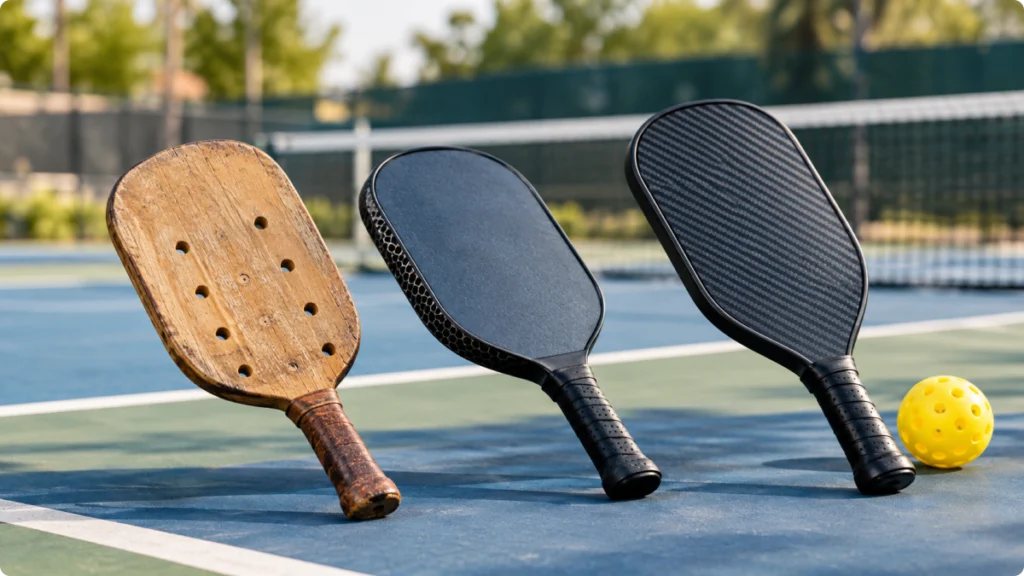
The Evolution of Pickleball Equipment has transformed the way players experience the sport, from simple wooden paddles to advanced carbon fiber designs engineered for power, control, spin, and comfort. Early pickleball paddles were heavy and basic, offering limited flexibility and performance. As the sport grew, manufacturers introduced lightweight materials such as aluminum, fiberglass, and composite surfaces, making paddles easier to handle and more responsive.
Paddle and ball technology isn’t just a footnote in pickleball’s history; it has shaped how the game is played, how fast it moves, and how accessible it is to people of different ages and skill levels. As Pickleball India continues to expand, understanding how the equipment got to where it is today gives players a better sense of what to look for when they buy their own gear. This article traces that journey – from simple wooden paddles knocked together in a garage to the engineered composite paddles and precision-designed balls used on courts today.
The Evolution of Pickleball Equipment: The Early Days
Pickleball’s earliest equipment was defined by what was on hand rather than what was ideal. In the sport’s founding years, paddles were solid wood – plywood, in many cases – cut into a shape that resembled an oversized table tennis paddle. There was little in the way of engineering behind these early designs. They were flat, solid pieces of wood with a handle, built for durability rather than performance.
This simplicity made sense for a sport that started as a casual family activity rather than a competitive one. The goal wasn’t to maximize spin or shave grams off the paddle weight; it was to have something sturdy enough to hit a ball back and forth reliably. Wooden paddles were heavy compared to what players use now, often affecting how long someone could comfortably play, but they were also nearly indestructible, which suited a sport still finding its identity.
Early balls followed a similar practical logic. Players used perforated plastic balls that were readily available rather than balls purpose-built for the sport. Over time, as pickleball started to be recognized as a distinct game with its own rules, the equipment began to reflect that – but in the beginning, it was largely improvised.
This early phase mattered because it established the fundamental feel of the game: a paddle sport played with a plastic, whiffle-style ball, at a pace slower than tennis but faster than table tennis. The limitations of the equipment also shaped early playing styles. Heavier wooden paddles meant fewer players relied on fast wrist action or aggressive spin; the game leaned more on placement and control. If you’re new to the sport and want a grounding in how it’s played today, What is Pickleball is a useful starting point before diving deeper into equipment specifics.
How Pickleball Paddles Evolved Over the Years
The shift away from solid wood paddles marks one of the more significant chapters in pickleball paddle evolution. As the sport grew and players began looking for ways to play longer, hit harder, and generate more spin, manufacturers started experimenting with composite materials.
The first major change was the introduction of composite paddles, which used a core material sandwiched between two outer layers instead of a single solid piece of wood. This construction method immediately reduced weight, which made a noticeable difference in comfort and reduced strain on the arm during extended play. Fiberglass surfaces followed, offering a different feel and response compared to both wood and early composites – generally providing a softer touch and a slightly more forgiving hitting surface.
Graphite and carbon-based materials came next, and this is where paddle technology started to resemble what’s used today. These materials allowed manufacturers to build thinner, stiffer paddle faces without sacrificing strength, which opened the door to paddles that could be tuned for specific characteristics rather than being a one-size-fits-all product.
Each material shift affected the game in measurable ways:
- Weight dropped significantly from the solid wood era, making paddles easier to maneuver
- Balance could be adjusted by changing where mass was distributed in the paddle
- Power increased as stiffer surfaces transferred more energy to the ball
- Control improved as manufacturers refined surface textures for better ball grip
- Spin became more achievable with textured carbon and fiberglass faces
- Comfort improved through better vibration dampening in the core
- Durability increased even as paddles got lighter
- Maneuverability improved as overall weight decreased and swing weight became more balanced
What this means for today’s players is choice. Earlier generations of pickleball players had a handful of paddle options, mostly differing in size rather than performance characteristics. Now, a beginner, a competitive tournament player, and a recreational weekend player can each select a paddle suited to their specific needs, rather than adapting their game to whatever paddle happens to be available.
From Simple Balls to Modern Pickleball Balls
While paddles tend to get most of the attention, the ball has gone through its own meaningful evolution. Early pickleball balls were essentially repurposed plastic balls, similar to those used in other backyard games, with holes for aerodynamic consistency. As the sport matured, ball design became more specialized, with manufacturers paying closer attention to hole patterns, wall thickness, and overall consistency.
One of the more important developments has been the distinction between indoor and outdoor pickleball balls. Indoor balls typically have larger, fewer holes and are made from a slightly softer plastic, since they’re designed for smooth indoor court surfaces and don’t need to resist wind. Outdoor balls, by contrast, usually have smaller, more numerous holes and a harder plastic construction to hold up against rougher surfaces and outdoor conditions like wind and temperature swings.
Temperature and playing surface can noticeably affect how a ball performs. Cold weather tends to make plastic balls harder and less lively, while heat can soften them. Rough outdoor courts wear down balls faster than smooth indoor surfaces, which is why ball selection is often as important as paddle selection when it comes to consistent play.
Consistency in ball construction matters more than casual players might expect. A ball with uneven wall thickness or irregular hole spacing can behave unpredictably in flight, which affects everything from serve accuracy to rally consistency. This is especially relevant for players searching for the Best Pickleball ball India has to offer, since consistent bounce and flight characteristics directly affect how fair and enjoyable a match feels – whether it’s a casual weekend game or a structured tournament.
For clubs, academies, and retailers, ball selection becomes a practical, ongoing consideration rather than a one-time purchase. Organizations running regular sessions or supplying multiple courts often need to Buy bulk pickleball ball orders to keep costs manageable and ensure every court has consistent equipment. For a closer look at ball specifications and options, the pickleball balls section covers the practical differences worth knowing before buying.
Modern Pickleball Paddle Technology and Materials
Modern paddle construction can seem complicated at first glance, but it comes down to a few core components: the surface material, the core, the shape, and the thickness. Understanding each helps explain why two paddles that look similar can feel completely different on court.
Paddle Surface Materials
Carbon fiber surfaces are known for their stiffness and durability. This stiffness allows energy to transfer efficiently from paddle to ball, which many players associate with a firmer, more responsive feel. Carbon fiber paddles also tend to hold up well over repeated use.
Fiberglass surfaces, sometimes called composite or fiberglass-composite, generally offer a softer response compared to carbon fiber. This can translate into a more forgiving feel off the paddle face, which some players find easier to control, particularly around the kitchen line.
Graphite paddles sit somewhere in this broader composite family, often valued for being lightweight while still offering a responsive surface. The exact feel varies depending on how the graphite layer is constructed and paired with the core.
None of these materials is universally “better” – each offers a different balance of power, control, and feel, and the right choice depends on individual playing style.
Paddle Core Materials
Most modern paddles use a polypropylene honeycomb core, a lightweight structure made up of small hexagonal cells. This design keeps weight down while maintaining structural integrity. Core thickness varies by paddle, generally ranging from thinner cores designed for a crisper, more direct feel to thicker cores built for a softer touch and better vibration absorption. Thicker cores tend to be popular among players who prioritize control and touch shots, while thinner cores are often favored by those chasing more power.
Paddle Shapes
Paddle shape has become one of the more noticeable areas of variation:
- Widebody paddles offer a larger hitting surface, which generally means a bigger sweet spot and more forgiveness on off-center hits
- Elongated paddles trade some width for extra length, which can increase reach and leverage for players who value that in serves and overhead shots
- Traditional or standard shapes aim for a balance between the two, often appealing to players who don’t want to commit fully to either extreme
Shape affects more than just aesthetics – it influences reach at the net, how forgiving the paddle feels on mishits, and how quickly a player can reset their paddle position between shots.
Paddle Thickness
Paddle thickness, typically measured in millimeters, plays a direct role in how a paddle feels during play. Thinner paddles often provide a more direct, responsive feel with a firmer connection to the ball, which many power-oriented players prefer. Thicker paddles tend to absorb more vibration and shock, offering a softer, more controlled feel that’s often favored by players focused on dinks, resets, and touch around the net. Neither is inherently superior – it’s a matter of matching thickness to the way an individual plays.
How Modern Equipment Has Changed the Way Pickleball Is Played
Equipment development hasn’t just changed what paddles look like – it has changed how the sport itself is played. Lighter paddles have allowed for faster reactions at the net, particularly during fast-paced volley exchanges where split-second timing matters. Textured surfaces on carbon fiber and fiberglass paddles have made spin a much bigger part of strategic play than it was in the wooden paddle era, giving players more tools to control rallies rather than simply reacting to them.
There’s also been a broader shift toward specialization. Some paddles are designed with power in mind, favoring stiffer surfaces and thinner cores for players who want to drive the ball. Others lean into control, using thicker cores and softer surfaces to help with the delicate net play that dominates competitive pickleball. Lightweight paddle options have made the sport more accessible to players who might otherwise find heavier equipment tiring, including older players and those newer to racket sports generally.
Comfort has improved too, particularly through better vibration dampening, which reduces strain on the elbow and wrist during long sessions – a meaningful factor as more players take up the sport recreationally and play more frequently. Perhaps most notably, customization has become the norm rather than the exception. Players can now select paddles based on their specific playing style rather than adapting their game to whatever equipment happens to be available, a shift that would have been unthinkable in the sport’s early wooden paddle days.
This evolution ties directly into what’s happening with Pickleball India right now. As more courts open and more structured coaching becomes available, players are becoming more particular about their equipment, mirroring trends seen in more established pickleball markets. The growing interest in India isn’t just about court access – it’s also about players wanting gear that actually fits how they play.
Choosing Modern Pickleball Equipment in India
With so many options available, choosing the right paddle and ball setup can feel overwhelming. A practical approach is to work through a few key factors rather than picking based on appearance or price alone.
- Playing level – beginners often benefit from more forgiving, larger sweet-spot paddles, while advanced players may prioritize specific performance traits
- Playing style – aggressive, power-focused players and control-oriented, net-focused players typically benefit from different paddle characteristics
- Paddle weight – lighter paddles reduce fatigue but may sacrifice some power; heavier paddles can add pop but require more arm strength
- Paddle shape – widebody for forgiveness, elongated for reach, standard for balance
- Paddle thickness – thinner for responsiveness, thicker for control and comfort
- Surface material – carbon fiber, fiberglass, or graphite, based on desired feel
- Core construction – thickness and density affect touch and power
- Indoor vs outdoor balls – matching the ball to where you’ll actually play matters more than it seems
- Grip comfort – grip size and cushioning affect control and reduce hand fatigue
- Durability – especially relevant for frequent players or shared club equipment
- Budget – quality options exist across a range of price points
- Brand and manufacturer reliability – consistency in construction quality affects long-term performance
There’s no single paddle that works best for every player, which is worth remembering when browsing options for pickleball equipment in India. A beginner picking up the sport for the first time has very different needs from a competitive club player or an academy outfitting dozens of students. Recreational players might prioritize comfort and forgiveness, while clubs and academies often look for durability and consistency across multiple units. For those exploring premium pickleball paddles India has available, it’s worth testing a few different paddle shapes and thicknesses if possible, since specifications on paper don’t always translate to how a paddle feels in hand. You can browse GLIDERZ pickleball paddles to compare different builds suited to varying skill levels and playing styles.
The Future of Pickleball Equipment
Pickleball equipment is unlikely to stay static, given how quickly the sport has grown and how much attention manufacturers are now putting into research and design. Several realistic trends seem likely to continue shaping the space.
Advanced composite materials will likely keep evolving, with manufacturers refining how carbon fiber, fiberglass, and other surface materials are layered and treated to fine-tune performance characteristics. Durability improvements are also a natural next step, as players put more paddles through extended, frequent use and expect equipment to hold up over time rather than degrading quickly.
Vibration management is another area likely to see continued attention, particularly as more recreational and older players enter the sport and prioritize comfort alongside performance. This could mean more refined core designs or edge construction aimed at reducing shock during off-center hits.
Paddle shapes may continue to diversify further, as manufacturers respond to feedback from different player types rather than offering a handful of generic shapes. More precise manufacturing processes – including better quality control in surface texturing and core consistency – should also help reduce the variability that sometimes exists between individual paddles, even within the same model line.
Perhaps most relevant for players in India is the simple fact that demand is growing. As more clubs, academies, and recreational players enter the sport, equipment availability is likely to improve, with more options manufactured domestically rather than relying entirely on imports. This mirrors patterns seen in other countries where pickleball first took hold and equipment manufacturing eventually followed local demand. Governing bodies like USA Pickleball continue to document standards and rules that influence how equipment is designed and certified globally, which gives some indication of where quality benchmarks are headed.
GLIDERZ and the Evolution of Modern Pickleball Equipment
The growth of pickleball has created real demand for thoughtfully designed paddles and dependable equipment – not just for individual players, but for the clubs, academies, and retailers supporting the sport’s expansion. As the game becomes more competitive and players become more particular about how their equipment performs, that demand only grows.
GLIDERZ is an Indian pickleball paddle manufacturer and supplier working within this space. The company develops pickleball paddles and related equipment for players across different skill levels, while also supporting clubs, academies, retailers, and distributors who need consistent, reliable gear for their operations. Rather than offering a single generic product, GLIDERZ focuses on paddle construction that reflects the material and design considerations discussed throughout this article – surface materials, core construction, shape, and thickness – tailored to different playing needs.
For players, coaches, or businesses looking to explore paddle options or place bulk orders, you can Contact GLIDERZ directly to discuss specific requirements.
Frequently Asked Questions About Pickleball Equipment
How has pickleball equipment changed over the years?
Equipment has moved from heavy, solid wood paddles to lightweight composite paddles built with carbon fiber, fiberglass, and graphite surfaces paired with polypropylene honeycomb cores. Balls have similarly evolved from generic plastic balls to purpose-built indoor and outdoor designs with specific hole patterns and durability characteristics.
What were the first pickleball paddles made from?
Early paddles were made from solid wood, typically plywood, cut into a simple paddle shape. They were heavy and basic compared to modern paddles but durable and practical for the sport’s early, casual origins.
What are modern pickleball paddles made from?
Modern paddles typically use a composite construction with a carbon fiber, fiberglass, or graphite surface layered over a polypropylene honeycomb core, offering a lighter, more responsive alternative to solid wood.
What is the difference between carbon fiber and fiberglass pickleball paddles?
Carbon fiber paddles tend to be stiffer, offering a firmer, more direct response, while fiberglass paddles generally provide a softer, more forgiving feel. The right choice depends on whether a player prioritizes power or touch.
How have pickleball balls changed over time?
Balls have gone from generic, repurposed plastic balls to specialized designs, with distinct indoor and outdoor versions built for different hole patterns, hardness, and surface durability requirements.
How do I choose the right pickleball paddle?
Consider your playing level, style, and priorities – weight, shape, thickness, surface material, and core construction all affect performance differently, so it often comes down to matching these traits to your own game.
What pickleball equipment do beginners need?
Beginners generally need a forgiving paddle with a larger sweet spot, a reliable indoor or outdoor ball depending on where they’ll play, comfortable court shoes, and basic accessories like an extra grip.
Where can I buy pickleball equipment in India?
Pickleball equipment in India is increasingly available through dedicated sports retailers, online stores, and manufacturers like GLIDERZ, which supply paddles and balls to individual players as well as clubs and academies.
Conclusion
Pickleball equipment has traveled a long way from the solid wood paddles of the sport’s early days to today’s engineered composite paddles and precisely constructed balls. Each shift in materials and design – from fiberglass to carbon fiber, from generic plastic balls to indoor and outdoor-specific constructions – has changed not just how equipment feels, but how the game itself is played. As Pickleball India continues to grow, that evolution shows no sign of slowing down, with more players, clubs, and academies paying closer attention to the gear that suits their specific style of play.
👉 Looking to start playing? Explore GLIDERZ Pickleball paddles – Made in India for Indian players.