By Prajakta Shinde
Most of us know that exercise helps with weight management. The harder part is turning up week after week. Treadmills get boring, gym memberships go unused, and the 6 a.m. alarm loses its charm by the third Monday.
The workouts people stick with are usually the ones they enjoy. That is a big reason pickleball for weight loss has become such a common question among Indian readers who want a fitness routine that doesn’t feel like a chore.
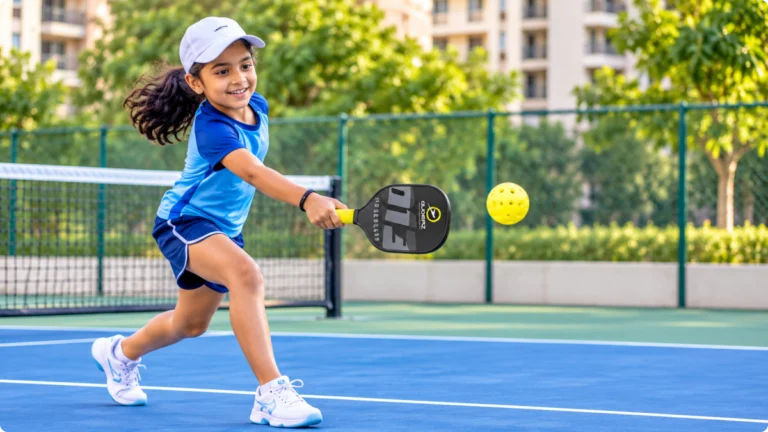
Pickleball is a paddle sport played on a compact court with a perforated plastic ball. It blends the quick exchanges of table tennis, the court craft of badminton, and the paddle-and-net format of tennis. You walk, shuffle, reach, and sprint in short bursts, usually while chatting and laughing with your partners. The rules are simple enough to learn in an afternoon, which is why Pickleball India is growing fast, with housing societies, clubs, and sports complexes across Indian cities adding courts. If you are new to the game, learn what pickleball is before reading further.
So, is pickleball for weight loss worth trying? Here is the short answer: pickleball can support weight management when you play regularly as part of a balanced lifestyle. It is not magic. Results depend on how hard you play, how often, what you eat, how well you sleep, and your own body and circumstances. Nobody can honestly promise a specific number on the scale, and this article won’t try.
What it can do is give you an enjoyable, accessible way to move more. Let’s look at how.
Is Pickleball a Good Workout for Weight Loss?
Weight loss generally comes down to maintaining a calorie deficit over time, meaning you use more energy than you take in, consistently. Exercise raises the energy you use. Diet determines how much you take in. Sleep, stress, and individual physiology influence both.
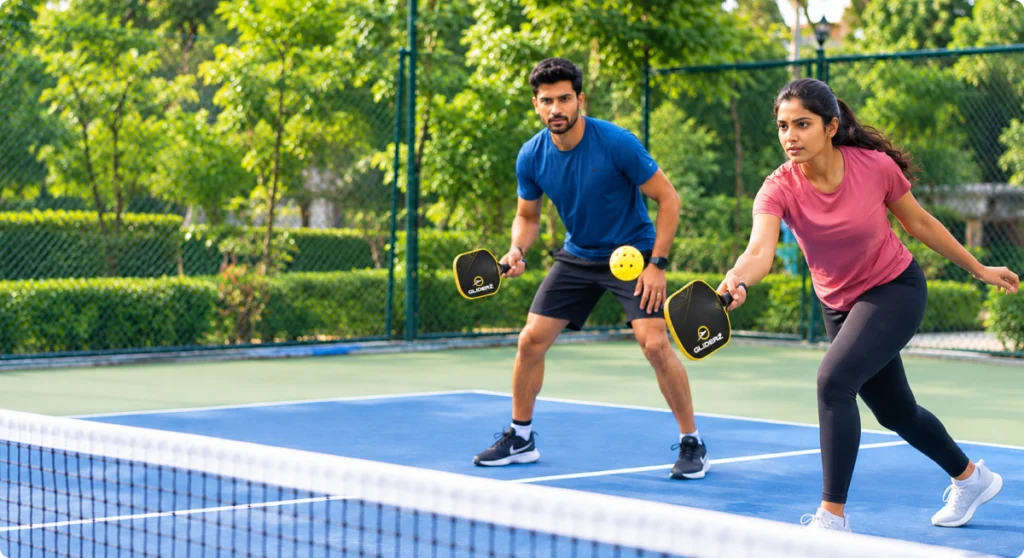
In any pickleball for weight loss plan, the sport contributes on the exercise side. You are rarely standing still. You move up to the non-volley zone (the “kitchen”) for soft shots, drop back to defend deeper drives, shuffle sideways to cover your partner, and stretch for balls just out of reach. Your legs, core, shoulders, and arms all work, and your heart rate rises and falls as rallies start and stop.
Movement and energy expenditure
Think of pickleball as interval-style activity. A rally lasts a few seconds to a minute or more, followed by a short pause while you collect the ball. Those bursts raise your heart rate, and the breaks let you recover enough to go again. Over an hour, that adds up to a meaningful amount of movement, even if no single moment feels gruelling.
Singles versus doubles
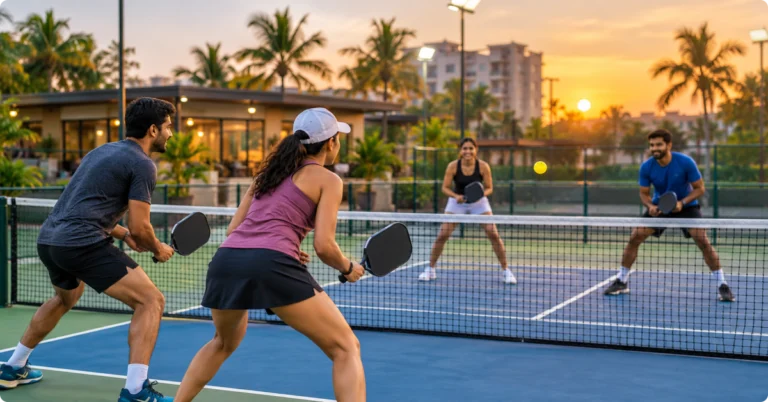
Doubles is the most common recreational format. You share the court, so each person covers less ground. It is social, moderate in intensity, and a great place to begin.
In singles, you cover the whole court yourself, which means more running, more direction changes, and typically a higher energy demand. If you have joint concerns or are just starting out, doubles is usually the gentler choice. Once you are comfortable, some singles play is one way to raise the challenge.
Recreational versus competitive intensity
A relaxed evening game is lighter than a fast, tournament-style match. Neither is “better.” A casual game you play four times a week may do more for you than an intense session you dread and skip.
Consistency is the real advantage
The biggest strength of pickleball for weight loss and weight management is often not calories per hour. It is adherence. Friends, scorekeeping, and friendly rivalry give you reasons to return that “I should exercise today” simply doesn’t.
Building up gradually
If you haven’t exercised in a while, start with one or two sessions a week of 30 to 45 minutes of relaxed doubles. Add time or a session when your body feels ready, not before. Sore calves and tired shoulders in the first couple of weeks are normal. Sharp pain is not, and it is worth stopping and getting checked.
How Many Calories Can You Burn Playing Pickleball?
The honest answer is: it depends. Anyone who says pickleball burns exactly X calories an hour is simplifying.
What influences calorie burn
- Body weight. Heavier people generally use more energy to move the same distance.
- Duration. A 90-minute session burns more than a 45-minute one, all else being equal.
- Intensity. Hard, fast play uses more energy than gentle rallies.
- Singles versus doubles. Singles usually involves more court coverage and higher energy use.
- Rest periods. Long breaks between games lower the average hourly burn.
- Fitness level. Beginners often work harder at the same pace because they move less efficiently, while fitter players may find the same session easier.
What published estimates say
Published estimates for an hour of pickleball vary widely, because sources use different assumptions and different players. As a rough guide, many place casual recreational doubles at a few hundred calories per hour, moderate play somewhat higher, and competitive or singles play higher still, sometimes beyond 500 calories per hour for heavier or highly active players.
Treat these as ballpark figures, not promises. They come from formulas and wearable-device data rather than measurements of your body, and you may land somewhere else entirely.
Here is a practical way to think about pickleball for weight loss. Three moderate one-hour sessions a week add a few hundred calories of movement per session to your week. That can contribute to a calorie deficit, but only if your eating doesn’t rise to match. A post-game sugary drink or an “I earned this” meal can easily cancel out the energy you used on court. That doesn’t mean you can’t enjoy food. It means exercise and eating work together.
Fitness trackers give estimates, not exact numbers
Smartwatches and fitness bands are useful for trends such as heart rate, active minutes, and week-to-week comparisons. But their calorie figures are algorithm-based estimates, and accuracy varies by device. Use yours to stay motivated on your pickleball for weight loss journey, not to count every calorie.
Fitness Benefits of Pickleball Beyond Weight Loss
The scale is only one measure of health, and pickleball for weight loss is only one reason to play. Pickleball is a form of exercise, not a treatment, and it doesn’t prevent, treat, or cure any medical condition. What it can do is help you stay active, with benefits that don’t show up as a number.
- Cardiovascular activity. Moderate-intensity play raises your heart rate and breathing. Done regularly, this kind of aerobic activity supports cardiovascular fitness.
- General fitness. Your legs handle movement, your core handles stability and rotation, and your shoulders and wrists control the paddle. It isn’t a replacement for strength training, but it keeps many muscle groups working.
- Agility, coordination, and balance. Quick direction changes, reaching, and tracking a small ball train hand-eye coordination. Staying steady while shifting your weight carries over into everyday movement. Learning good footwork also helps you move more safely.
- Social interaction. Doubles means you always play alongside someone, and courts attract friendly groups that rotate partners. That makes exercise feel less like a task.
- Enjoyment and adherence. If you look forward to your session, you are far more likely to keep it up. For long-term weight management, that may matter most.
- Recreational wellbeing. Many players feel more energised and relaxed after a game. Experiences differ, and pickleball isn’t a substitute for professional mental health support, but time spent on something you enjoy is a worthwhile part of a healthy routine.
Pickleball vs Walking, Jogging, and Gym Workouts for Weight Loss
No single exercise is universally best, and pickleball for weight loss is no exception. The right one suits your body, schedule, and budget, and is something you can maintain for months rather than days.
Walking. The most accessible exercise there is: no equipment, no partner, gentle on most bodies. It is a perfectly good place to start or restart. Pickleball usually asks for more, with stop-start movement and lateral shuffling raising the intensity, plus coordination and company. But if you only have 30 minutes for an after-dinner walk, that still counts.
Jogging. Continuous jogging can use more energy per minute than recreational pickleball, but it places repetitive impact on knees, ankles, and hips, which may not suit everyone. If boredom has ended your running plans before, a sport format may hold your attention better.
Cycling. Low-impact and easy to scale, cycling is excellent for the legs and cardiovascular system but does little for the upper body.
Gym workouts. The gym’s advantage is structure and progression: planned sessions and measurable strength gains. Pickleball won’t build maximum strength the way progressive resistance training can, but it is often more enjoyable for people who dislike gyms.
Why combine aerobic exercise and strength training?
Health guidance, including from the World Health Organization, generally recommends regular moderate-intensity aerobic activity each week plus muscle-strengthening activity on two or more days. Pickleball can cover the aerobic part. Two short strength sessions a week, using bodyweight squats, lunges, step-ups, push-ups, or resistance bands, round out the routine and support the muscles you use on court.
The takeaway: choose what you will actually do. A routine you can maintain beats a “perfect” one you abandon after three weeks.
How to Use Pickleball for Weight Loss: A Sustainable Routine
Think in terms of habits rather than quick fixes. Here is what helps most.
- Start manageable. Begin with 30 to 45 minutes of relaxed play, two or three times a week. If you finish tired but good, that is about right. If you can barely walk the next day, you did too much.
- Progress gradually. After a few weeks, extend sessions slightly or add a day. Change one variable at a time so your body can adapt.
- Warm up. Five to ten minutes of brisk walking, arm circles, leg swings, and gentle torso rotations prepares your joints and muscles.
- Cool down. Slow down for a few minutes, then stretch your calves, thighs, hips, and shoulders gently.
- Stay hydrated. Heat and humidity matter. Drink water before, during, and after play, and consider oral rehydration solution if you sweat heavily. Play early morning or evening when you can. If you feel dizzy, unusually weak, or nauseous, stop, rest in the shade, and drink fluids. If a health condition affects your fluid or salt intake, ask your doctor what suits you.
- Eat balanced meals. Food decisions carry equal weight in weight management. Build meals around vegetables, protein such as dal, eggs, paneer, curd, fish or chicken, whole grains, and healthy fats, in sensible portions. A registered dietitian can offer personalised advice.
- Sleep and recover. Sleep affects appetite, energy, and mood, and rest days let muscles and joints recover.
- Add strength training. Two short sessions a week, with a focus on good technique.
- Wear proper shoes. Court shoes or supportive sports shoes designed for lateral movement protect your ankles and knees. Running shoes are built for forward motion and may not give enough side support.
- Choose suitable equipment. Pickleball equipment India now offers is easier to find than ever, so pick what feels comfortable. A paddle that is too heavy or awkward can strain your arm or wrist, and the wrong ball for your surface makes play frustrating. Beginners generally do well with a balanced, comfortable paddle and a ball suited to indoor or outdoor courts.
A sample weekly routine for beginners
This is an illustration only. Adapt it to your fitness, schedule, and recovery.
| Day | Activity |
|---|---|
| Monday | Pickleball, 45 minutes of relaxed doubles, with warm-up and cool-down |
| Tuesday | 20 to 30 minute walk, plus 15 minutes of bodyweight strength work |
| Wednesday | Rest or gentle stretching |
| Thursday | Pickleball, 45 to 60 minutes |
| Friday | 20 to 30 minute walk or easy cycle |
| Saturday | Pickleball with friends, 60 minutes |
| Sunday | Rest, light stretching, meal planning |
When to talk to a professional
If you have a heart condition, high blood pressure, diabetes, joint problems, an injury, are pregnant, or have any concern about starting exercise, speak to a qualified healthcare professional first. Stop and seek medical advice if you feel chest pain, severe shortness of breath, dizziness, or unusual pain during activity.
How to Get Started with Pickleball in India
Starting pickleball for weight loss is easier than most people expect.
Find courts and groups. Pickleball India is expanding through apartment complexes, sports clubs, academies, and community courts, especially in cities like Pune, Mumbai, Bengaluru, Hyderabad, Chennai, Delhi, and Ahmedabad. Ask at your local sports complex or housing society, since many badminton courts can be marked for pickleball. Social media groups and WhatsApp communities are a common way to find open play, and many welcome absolute beginners and will lend you a paddle for your first game.
Learn the rules. The serve is underhand and goes diagonally. Each side lets the ball bounce once before volleying (the double bounce rule). You can’t volley from inside the non-volley zone. Games are typically played to 11 points, win by two. For more on the sport, its rules, and equipment standards, see the official USA Pickleball website, the national governing body in the United States. Check with your local court or club for any variations that apply in India.
Join beginner-friendly sessions. You will pick up etiquette, scoring, and positioning faster by playing with others than by reading.
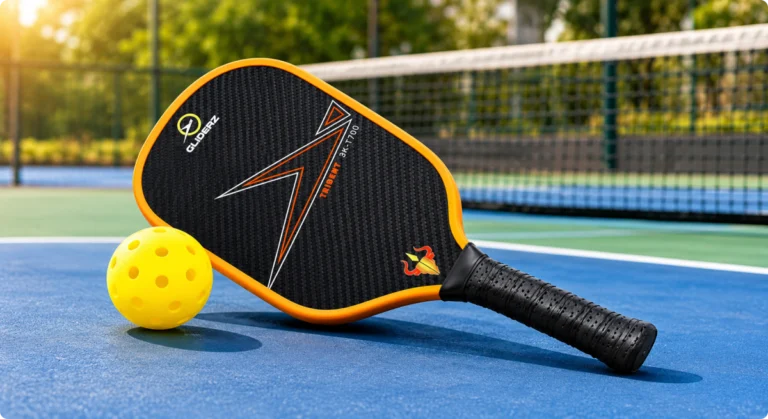
Choose beginner-appropriate equipment. You need a paddle, a few balls, comfortable sports shoes, water, and a towel. When you compare pickleball equipment India offers, including a first pickleball paddle India brands make, start with comfort and fit. GLIDERZ is an Indian pickleball equipment brand based in Pune, offering paddles and balls for players at different levels. If you are choosing your first set, browse GLIDERZ pickleball paddles to compare options by material, weight, and feel, and explore pickleball balls suited to indoor or outdoor play. If you have questions, or you represent a club or organisation buying in volume, contact the GLIDERZ team.
Prioritise comfort and gradual improvement. Don’t worry about perfect technique on day one. Keep the ball in play and enjoy yourself. The benefits come from showing up regularly.
Frequently Asked Questions About Pickleball for Weight Loss
1. Is pickleball good for weight loss?
Pickleball for weight loss can support weight management as part of a balanced lifestyle. It gets you moving, raises your heart rate, and is enjoyable enough that many people play regularly. But weight loss depends on a calorie deficit over time, influenced by diet, sleep, activity, and individual circumstances. No sport guarantees results.
2. How many calories can you burn playing pickleball for one hour?
It varies widely. Published estimates range from a few hundred calories per hour for casual play to higher figures for competitive or singles play. Body weight, intensity, format, and fitness level all matter, and trackers give approximations, so treat any figure as a rough guide.
3. Is pickleball better than walking for weight loss?
Not necessarily better, just different. Pickleball is usually more intense than a casual walk and adds coordination and social interaction. Walking is simpler, more flexible, and gentler. The best choice is the one you can do consistently, and many people combine the two.
4. How often should I play pickleball to improve my fitness?
Many beginners start with two or three sessions a week of 30 to 60 minutes and build up gradually. General health guidance recommends regular moderate-intensity aerobic activity across the week, and pickleball can count toward that. Adjust to your fitness, recovery, and schedule.
5. Can beginners lose weight by playing pickleball?
Beginners can use pickleball for weight loss as part of a weight-management routine, since the game is easy to learn and scales with ability. Results depend on consistency, nutrition, and individual factors, so focus on building a sustainable habit rather than expecting rapid change.
6. Does pickleball help improve cardiovascular fitness?
Regular moderate-intensity play raises your heart rate and breathing, which is the kind of aerobic activity that supports cardiovascular fitness. It is not a treatment for any heart condition, so talk to your doctor first if you have heart concerns.
7. What equipment do I need to start playing pickleball in India?
A paddle, a few pickleballs, comfortable sports shoes, and water. A towel, cap, and sunscreen help in hot weather. You can explore pickleball paddle India options and balls from Indian brands like GLIDERZ and choose based on comfort, skill level, and whether you play indoors or outdoors.
8. Can pickleball alone help me lose weight?
For most people, exercise alone is rarely enough. Diet, sleep, stress, and daily activity all play major roles. Pickleball for weight loss can be a valuable part of the picture, especially because you may keep doing it, but it works best alongside balanced eating and good recovery. A doctor or registered dietitian can offer personalised guidance.
Conclusion
So, is pickleball a good workout for weight loss? It can be a useful part of one. It gets you moving, it is accessible to beginners, and because it is social and fun, it may help you stay consistent, which is often the hardest part of any fitness plan.
Pickleball for weight loss isn’t a shortcut. Calorie burn varies from person to person, and weight management also depends on how you eat, sleep, and live. Pair regular play with strength training, balanced meals, hydration, and recovery, and you have a routine that supports your fitness rather than punishing you.
Start gradually, listen to your body, and choose activities you enjoy enough to repeat. If you have a health condition or any concerns, speak to a healthcare professional before beginning.
👉 “Looking to start playing? Explore GLIDERZ Pickleball paddles – Made in India for Indian players.”