By Prajakta Shinde
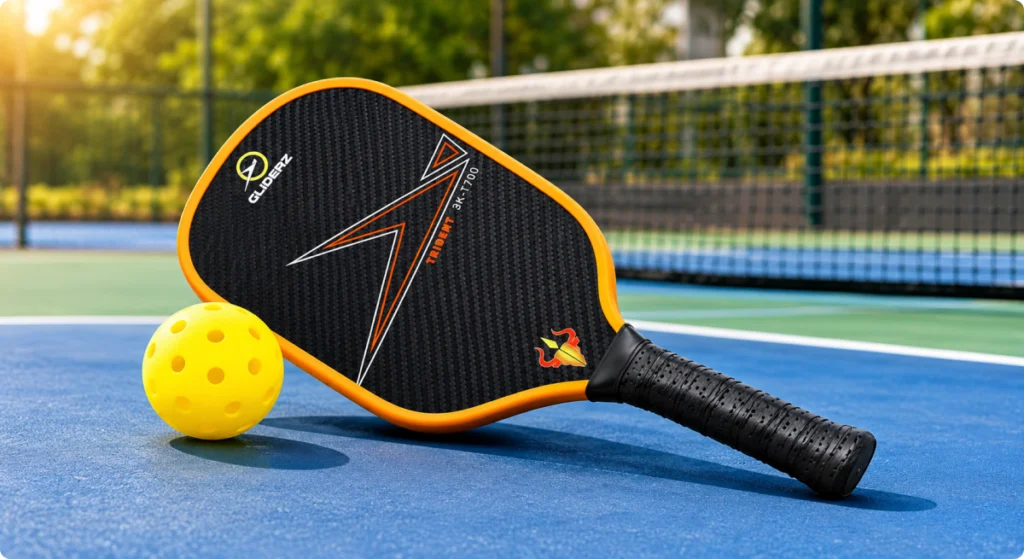
Walk into any pickleball court in India on a weekend morning and you will see dozens of different bats in play. Some are slim and light, some are wide and heavy, and some look nothing like the others. If you are shopping for your first pickleball racket, that variety can feel confusing.
Here is the short version: a good racket is not about the flashiest graphics or the highest price tag. It comes down to what the face is made of, what sits inside the core, how it is built, and whether it suits your hands and your style. This guide walks you through all of it, in plain language.
If you are brand new to the sport, start with our beginner’s guide to pickleball in India, then come back here to choose your equipment.
A quick note on the name: most players and the official rulebook say “paddle”, while many Indian players say “racket” or “bat”. They all mean the same thing. This article uses both.
Anatomy of a Pickleball Racket: The Parts That Matter
Every pickleball racket looks simple, but it is a small piece of engineering. Knowing the parts helps you read a product listing without getting lost.
The Face (Hitting Surface)
The face is what actually meets the ball. Its material and texture affect how the ball feels, how much control you get and how the racket sounds on contact. Common face materials include fibreglass, carbon fibre and graphite, which we cover in detail below.
The Core
Inside the racket sits the core, usually a honeycomb-style structure. It is the biggest factor in how the racket feels: soft and quiet, or firm and lively. Most cores in the market are made from polymer, aluminium or aramid-based material.
The Edge Guard
This is the rim around the face. It protects the edges if you scrape a wall or a court surface, and it adds some stability. On rough Indian concrete courts, where a dropped racket is a matter of when rather than if, a well-finished edge guard earns its place.
The Handle and Grip
The handle length and grip circumference decide how comfortable the racket is over a long session. Many adult players in India find a mid-range grip size comfortable, but hand size varies, so try before you commit where possible. A thin overgrip can add a little thickness later, whereas shaving a grip down is much harder.
Shape and Size
Rackets come in a few common shapes:
- Standard: balanced and versatile, a safe choice for most players
- Elongated: longer face and handle, offering more reach but usually a slightly smaller sweet spot
- Wide-body: broader face, generally more forgiving on off-centre hits
Pickleball Racket Technology: Materials and Construction
This is where most buying decisions are made, so it is worth slowing down. Different materials produce different feel, and no single option is “best” for everyone.
Face Materials Compared
| Face material | Typical feel | Often suits |
|---|---|---|
| Fibreglass | Lively, a bit more pop; usually easier to find at friendly prices | Beginners, casual and social players |
| Carbon fibre | Firmer, more precise and controlled | Players who want consistency and placement |
| Graphite | Light and responsive | Players who value quick hands at the net |
These are general characteristics seen across the industry, not guarantees. Two rackets with the same face material can feel quite different because of the core, the layering and the manufacturing quality. Always check the specification of the exact model you are considering.
Core Materials Explained
Polymer honeycomb is widely used because it tends to feel soft and quiet, which many players prefer for control and for dinking at the kitchen line.
Aluminium honeycomb typically feels lighter and more direct, which some players like for touch shots.
Aramid-based (Nomex-style) cores are usually firmer and can feel more powerful.
Core Thickness
Core thickness is a trade-off. A thicker core generally feels softer and more forgiving. A thinner core usually feels more direct and a little faster. Neither is better; it depends on whether you want to control the point or finish it.
Why Construction Quality Matters
Two rackets can list identical materials and still feel very different in your hand. What separates them is how well the parts are bonded together. A poorly bonded face can develop a dead spot or a rattling sound over time. This is one reason many Indian clubs and academies prefer buying from manufacturers who control their own production, since consistency across a batch matters when you are equipping a whole group.
What Makes a Quality Pickleball Racket? Rules, Build and Balance
A quality racket does three things: it stays within the rules, it is built consistently, and it suits the person holding it.
It Meets Official Equipment Standards
If you play only for fun, almost any racket works. But if you might play tournaments, the rulebook matters. According to USA Pickleball’s rules, a paddle’s combined length and width, including edge guard and butt cap, cannot exceed 24 inches, and the length cannot exceed 17 inches. There is no restriction on paddle thickness or weight under those rules.
The standards also say the paddle should be made of rigid, non-compressible material, and the hitting surface should not have holes, indentations or rough texturing that lets a player create excessive spin.
Tournament organisers may require paddles to appear on an approved list, so check the event rules before you register. If you are not planning to compete, these standards still serve as a handy benchmark for what a well-made racket looks like.
It Is Built Consistently
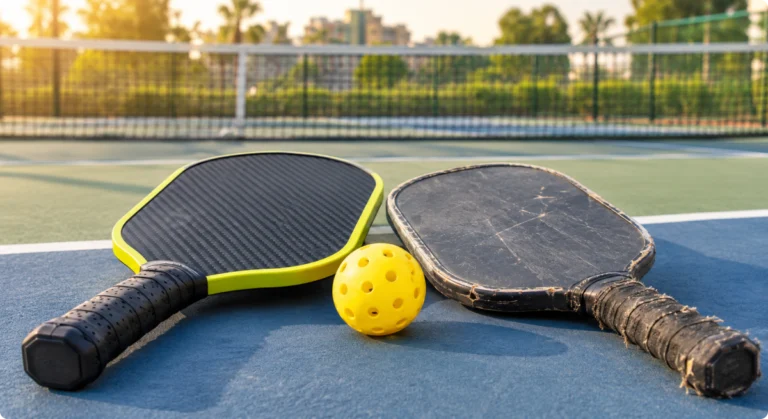
Look for even finishing on the edge guard, a clean bond between face and rim, and a handle that feels solid, not loose. Tap the face lightly with a fingernail. You are listening for a uniform sound across the surface rather than hollow patches.
It Has the Right Weight and Balance
Weight is personal. As a rough guide, lighter rackets tend to be easier to manoeuvre at the net, and heavier rackets tend to carry more stability on drives. Balance matters too: a head-heavy racket feels more powerful but can tire your wrist during long sessions, while a handle-heavy one feels quicker in hand.
If you play several matches back to back, a racket that feels fine for five minutes might feel different after an hour. Try to test it for longer than a few swings.
It Is Backed by a Manufacturer You Can Reach
Support matters more than people expect. If a handle loosens or a face delaminates, you want to know who to speak to. GLIDERZ is an Indian manufacturer, and our pickleball paddles are made in India, which means players, clubs and academies can talk to the team directly. For the exact specifications of any model, please refer to the individual product page.
A Quality Racket Checklist
- Stays within standard size limits
- Has an evenly finished edge guard
- Feels solid at the handle, with no wobble
- Gives a consistent sound across the face
- Suits your hand size and grip preference
- Comes from a brand you can contact if something goes wrong
How to Choose a Pickleball Racket for Indian Conditions
Most buying guides are written for American players on air-conditioned indoor courts or mild-weather outdoor courts. Indian conditions are different, and it helps to think about them.
Think About Where You Actually Play
- Outdoor concrete or acrylic courts in a housing society: the surface is abrasive and the sun is strong. Pay extra attention to edge guard quality and avoid leaving your racket in a hot car or on the dashboard.
- Converted badminton halls: floors are smooth and lighting is good, so feel and control often matter more than raw durability.
- Corporate and weekend leagues: many players are new to racket sports, so forgiveness and comfort usually beat advanced features.
- Coaching academies: the racket takes a lot of use, so build consistency becomes critical.
Match the Racket to Your Experience Level
| Your situation | What to prioritise |
|---|---|
| First-time player trying the sport | Comfortable grip, forgiving face, sensible price |
| Regular social player | Balanced weight, a feel you enjoy, solid build |
| Improving player moving to tournaments | Rule compliance, consistency, control |
| Coach or academy | Durability across multiple units, easy replacement |
Understanding Pickleball Paddle Price in India
You will see a wide spread of pickleball paddle price in India, from budget options for casual play to premium imported rackets. A higher price does not automatically mean a better fit for you. Imported rackets can also carry extra costs and may be harder to get after-sales support for, whereas a made in India pickleball paddle is often easier to access and replace.
Rather than chase the highest price, decide your budget first and then compare specifications within it. To see current options and prices, visit the GLIDERZ shop.
Do Not Forget the Ball
The best racket in the world will not feel right with a poor-quality ball. Balls differ in hardness and bounce, and outdoor and indoor balls are designed differently. Our pickleball balls page explains the range, so you can pair your racket with the right ball for your court.
For Clubs, Academies and Corporate Groups
If you are equipping a group, you will probably need more than one racket and a steady supply of balls. Buying consistent equipment in volume keeps sessions fair and reduces the “my racket feels different” complaint. You can order pickleball balls in bulk, and if you want to discuss larger requirements for a club or academy, get in touch with the GLIDERZ team.
Care Tips for Indian Weather
- Keep your racket in a cover rather than loose in a bag with keys and bottles.
- Avoid leaving it in a parked car in summer; prolonged heat is not kind to any composite material.
- Wipe the face and grip after sweaty sessions, especially during humid months.
- Replace a worn overgrip instead of gripping harder to compensate.
Pickleball Racket FAQs
1. Is a pickleball racket the same as a pickleball paddle?
Yes. “Paddle” is the official term used in the rulebook, but many players in India say racket or bat. They all refer to the solid-faced hitting tool used in pickleball. It has no strings, unlike a tennis or badminton racket, so the name is only a matter of habit.
2. What is a good pickleball racket for beginners?
Look for a racket with a comfortable grip, moderate weight and a forgiving face. Beginners benefit from a larger sweet spot rather than advanced features. Try a few if you can, and check that the grip size suits your hand before you worry about fancy technology.
3. Does the core material really make a difference?
Yes, noticeably. The core decides whether a racket feels soft and quiet or firm and lively. Polymer cores are popular for control, while firmer cores can feel more powerful. The best way to judge is to hit with different rackets and see which feels natural to you.
4. How heavy should my pickleball racket be?
There is no official weight limit under USA Pickleball rules, so it comes down to comfort. Lighter rackets are easier to manoeuvre at the net, while heavier ones add stability. If your wrist or arm feels tired quickly, try something lighter, and speak to a coach if the discomfort continues.
5. Can I use any racket in a pickleball tournament?
Not always. Many tournaments require paddles that meet official standards, and some ask for rackets from an approved list. Check the event rules before you register. For casual play at your society or club, rules are usually relaxed, but standard-compliant equipment is still a good benchmark.
6. How long does a pickleball racket last?
It depends on how often you play, how you store it and the quality of construction. Heavy use on rough outdoor courts wears the edge guard and grip first. Signs it is time to replace it include a dead spot on the face, a loose handle or a rattling sound.
Conclusion
A great pickleball racket is not defined by price or branding. It is defined by sensible materials, careful construction, compliance with the rules you care about and, above all, a comfortable fit for your hand and your game. Know the parts, understand the face and core, think about where and how often you play, and you will make a far better choice than someone who just picks the shiniest option.
If you are building a team, a club or an academy, think about consistency across your equipment too. And if you ever need advice, the GLIDERZ team is a message away.
👉 Looking to start playing? Explore GLIDERZ Pickleball paddles – Made in India for Indian players.