By Prajakta Shinde
You bought your paddle, played every weekend, and it felt great. Lately, though, your drives sit up a little too high, your dinks feel strangely flat, and your spin serve has stopped biting. Is it you, or is it the paddle?
More often than you’d think, it’s the paddle. Pickleball paddle lifespan is something most players in India never think about until their game starts slipping. A paddle can look fine on the outside and still be worn out on the inside.
This guide covers how long a paddle really lasts, what shortens or extends its life, the seven clearest signs that it’s time for a replacement, and how clubs and academies can plan paddle replacements without wasting money. If you’re completely new to the sport, start with our guide on what is pickleball and then come back here.
Pickleball Paddle Lifespan at a Glance: How Long Does a Pickleball Paddle Last?
There’s no single expiry date stamped on a paddle. How long a pickleball paddle lasts depends mostly on how often you play, how hard you hit, and how you treat it off the court. Here’s a realistic picture for different kinds of players:
| Player type | How often they play | Typical pickleball paddle lifespan |
|---|---|---|
| Casual / weekend player | 1-2 sessions a week | 1.5 to 2+ years |
| Regular club player | 3-4 sessions a week | Around 1 year |
| Competitive / tournament player | Daily practice and matches | 4 to 8 months |
| Academy or club “shared” paddles | Many users, many hours a day | 3 to 6 months |
| Coaches | Several hours of feeding and drilling daily | 3 to 6 months |
Treat these numbers as a guide, not a rule. A well-built paddle used by a careful weekend player can go on for years. A cheap paddle used by a hard-hitting teenager on a rough outdoor court can be finished in a few months.
The important point is this: a paddle usually “dies” gradually. You don’t wake up one morning to find it broken. It loses a little pop, a little spin and a little control every month, and you slowly adjust your game to it without noticing. That’s why so many players keep using a dead pickleball paddle far longer than they should.
What Affects Pickleball Paddle Lifespan?
Two paddles bought on the same day can age very differently. These are the factors that matter most.
Paddle Face Material and Pickleball Paddle Lifespan
The face is the part that meets the ball thousands of times in every session.
- Carbon fiber faces (such as T700 or 3K carbon) are stiff and strong, and they hold their shape well. Carbon fiber pickleball paddle durability is generally excellent. The textured surface that creates spin does wear smooth over time, though, especially with heavy topspin players.
- Fiberglass faces give more pop and feel lively, which beginners love. They are slightly more flexible, so they can show surface wear and soft spots a little sooner under heavy use.
- Hybrid faces sit in between, mixing the control of carbon with the power of fiberglass.
If you want a deeper look at how each material behaves, read our ultimate guide to pickleball paddle materials.
Core Type and Thickness
Inside almost every modern paddle is a polymer honeycomb core. Each hit compresses those tiny cells a little. Over months of play, some cells soften or crush permanently. That’s what pickleball paddle core damage really is, and it’s the main reason paddles go “dead”.
Thicker cores (around 16mm) tend to spread impact over more material and often feel more consistent for longer. Thinner cores (around 13mm) give more power but can show core fatigue sooner under hard hitting. Our comparison of 13mm vs 16mm pickleball paddles explains the trade-offs.
How Often and How Hard You Play
This one is obvious but worth saying clearly. A player who drives every ball at full power puts far more stress on the core than a soft-game player who loves dinking. Daily drilling, coaching sessions and multiball practice add up quickly too.
Indian Weather and Court Conditions
This is where Indian players need to be extra careful.
- Heat: In many cities, summer temperatures go well past 40°C. Leaving a paddle in a car boot or on the dashboard can weaken the adhesives that bond the face to the core. Heat damage is one of the quickest ways to shorten pickleball paddle lifespan.
- Humidity and monsoon: Moisture can get into worn edge guards and damaged grips. Damp storage also makes grips smell, peel and lose tack.
- Rough outdoor courts: Concrete and acrylic courts are hard on edge guards. Every low scoop or scrape along the surface wears the edge down a bit more.
Storage and Care Habits
Throwing the paddle into a kit bag with shoes, bottles and keys, or dropping it on the court after a lost point, causes small chips and dents that add up. Players who use a cover and store their paddle at room temperature almost always get much longer life out of it.
7 Signs You Need a New Pickleball Paddle
Not sure when to replace a pickleball paddle? Run through these seven signs. If two or three of them sound familiar, it’s probably time.
1. Dead Spots on the Paddle Face
Bounce a ball gently across different parts of the face, or tap it lightly with your knuckle. A healthy paddle gives a consistent, crisp sound. If one area sounds dull or the ball barely comes off it, you’ve found a dead spot. Dead spots are a clear sign that the core has broken down in that area, and they make your shots unpredictable.
2. Loss of Pop and Power (A Dead Pickleball Paddle)
You’re swinging the same way, but your drives land shorter and your put-aways no longer finish the point. This general loss of energy is the classic dead pickleball paddle feeling. It usually means the core has softened across the whole face, not just in one spot.
3. Worn-Out Surface Texture and Less Spin
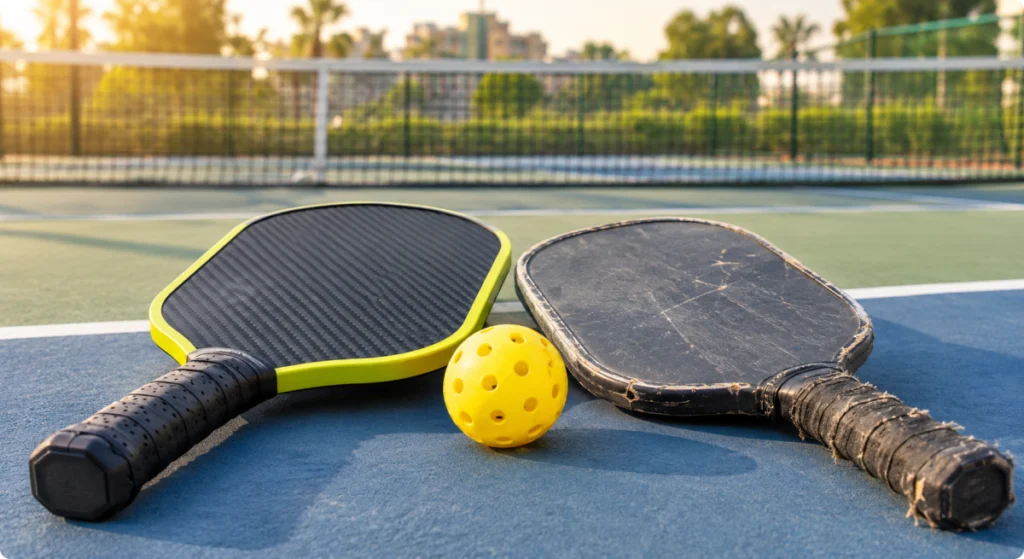
Run your fingers across the hitting area. When the paddle was new, you could feel the grit or texture. If the centre now feels smooth and polished compared with the edges, the surface has worn down. Less texture means less grip on the ball, so your topspin drives and slice serves lose their bite. For competitive players, this alone is often reason enough to replace a paddle. USA Pickleball also sets equipment standards that cover paddle surface properties.
4. Cracks, Delamination or Bubbles
Check the face carefully under good light. Look for:
- Hairline cracks, especially near the throat and edges
- Bubbles or raised areas where the face is lifting off the core (delamination)
- A soft area that flexes when you press it with your thumb
Any of these points to structural failure. A delaminating paddle won’t get better, and in some cases it can make the paddle non-compliant for sanctioned play.
5. Rattling or Buzzing Sounds
Shake your paddle next to your ear. If you hear rattling, something has broken loose inside: core material, foam or adhesive. A buzzing or “hollow” sound on contact is another warning sign. A paddle in this state is past the end of its pickleball paddle lifespan.
6. Damaged Edge Guard
Edge guards protect the edges of the face and core. Once they’re chipped, peeling or cracked, moisture and dirt can get into the core, and the face edges become much easier to damage. You can sometimes fix minor edge wear with edge tape. If the guard is badly broken and the paddle also shows other signs on this list, replace it.
7. A Grip That Can’t Be Saved (Plus General Wear and Tear)
A worn grip on its own is not a reason to buy a new paddle. You can simply re-wrap it or add an overgrip. But if the handle itself is loose, the butt cap is cracked, or the handle has started to twist, that’s serious pickleball paddle wear and tear. A loose handle affects control and can even put strain on your wrist and elbow.
Quick self-check summary
| Sign | Can you fix it? | Replace the paddle? |
|---|---|---|
| Worn grip only | Yes – re-wrap or overgrip | No |
| Minor edge scuffs | Yes – edge tape | No |
| Smooth face, less spin | No | Yes, if you rely on spin |
| Dead spots | No | Yes |
| Loss of pop overall | No | Yes |
| Cracks / delamination | No | Yes, straight away |
| Rattling inside | No | Yes, straight away |
How to Extend Your Pickleball Paddle Lifespan
You can’t make a paddle last forever, but good habits can easily add months to its life. Here’s what actually works.
Store It Properly
- Keep the paddle at room temperature, away from direct sunlight.
- Never leave it in a parked car, especially during Indian summers.
- Use a paddle cover or a padded section in your kit bag.
- During monsoon, let the grip dry fully before packing the paddle away.
Clean the Face Gently
Dust and court grime fill the surface texture and reduce spin. Wipe the face with a slightly damp microfibre cloth after play and let it air dry. Avoid harsh chemicals and abrasive scrubbers. For a full care routine, see our pickleball paddle maintenance tips.
Protect the Edges
On rough outdoor courts, a strip of edge guard tape is cheap insurance. Try not to scrape the paddle along the ground when you’re reaching for low balls.
Don’t Use Your Paddle as a Hammer
Banging the paddle on the net, the fence, your shoe or the floor after a bad point is a very common habit. Each knock can damage the core. Your paddle has done nothing wrong!
Rotate Two Paddles
If you play four or more times a week, owning two paddles and rotating them spreads the wear. It also means you always have a backup during a tournament.
Use Good-Quality Balls
Cracked, warped or very hard balls give inconsistent contact and can put uneven stress on the face. Make sure you’re playing with reliable balls. You can browse our pickleball balls made for Indian indoor and outdoor courts. Choosing the best pickleball ball India players can get for their court type makes a real difference to how both the ball and the paddle hold up.
Pickleball Paddle Lifespan for Clubs, Academies and Corporate Teams
For individual players, a worn paddle is a personal decision. For clubs, academies and corporate sports programmes, it’s a budgeting question. Shared paddles get used by many people for many hours, so their lifespan is much shorter.
Plan Replacement Cycles
Instead of waiting for paddles to break, the smartest academies plan ahead:
- Label and date every paddle when it enters service.
- Inspect them monthly using the seven signs above.
- Retire paddles in batches every few months, so players never end up with a mix of fresh and dead paddles in the same session.
- Move older paddles from coaching sessions to casual or beginner sessions before retiring them completely.
Buy Paddles and Balls in Bulk
Clubs go through balls even faster than paddles, especially during multiball training. If you run a facility, it makes sense to buy bulk pickleball balls instead of small packs. It brings the cost per ball down and keeps your supply consistent. GLIDERZ supplies pickleball balls for clubs and academies in bulk, along with paddles for coaching programmes and corporate teams.
Choose Durable Paddles for Shared Use
For shared or rental paddles, durability matters more than a top-end feel. Look for strong edge guards, a solid core and a comfortable standard grip that suits most hand sizes. If you’d like a bulk quote or advice on the right mix of paddles for your facility, contact the GLIDERZ team.
Choosing Your Next Paddle After Your Pickleball Paddle Lifespan Ends
Once you’ve decided your old paddle has had its day, use the moment to make a smarter choice. Ask yourself:
- What did I like about my old paddle? Weight, shape, grip size, power or control? Keep the good parts.
- What frustrated me? If you wanted more spin, look for a textured carbon face. If you wanted more power, a fiberglass or hybrid face may suit you better.
- How often do I play? Frequent players should invest in better construction, because carbon fiber pickleball paddle durability will save money over a year of heavy use.
- What is my budget? Pickleball paddle price in India varies widely, from entry-level options to premium carbon models. A mid-to-premium paddle that lasts a full year often costs less per session than a cheap one you replace three times.
Many Indian players also prefer a Made in India pickleball paddle. It’s built for local conditions, easier to get serviced, and often better value than imported options. You can compare our range on the GLIDERZ paddles page or browse everything in the GLIDERZ shop. If you’re still deciding, our guide to the best pickleball paddles in India is a good next read.
As the sport grows across the country, pickleball India communities are getting more serious about gear. Finding the best pickleball paddle India has to offer for your style is easier than ever. Just make sure it fits your game, not someone else’s.
Frequently Asked Questions About Pickleball Paddle Lifespan
01. What is the average pickleball paddle lifespan?
For most recreational players, the average pickleball paddle lifespan is around one to two years. Players who practise daily or compete regularly may need a new paddle every four to eight months. Shared paddles at clubs and academies usually last three to six months because they’re used for many more hours.
02. How do I know if my pickleball paddle is dead?
A dead pickleball paddle feels flat and loses its pop. Shots land shorter than usual, and some areas of the face sound dull when tapped. Bounce a ball across the face and listen for changes in sound. If you notice dead spots, rattling or less power with the same swing, the core has likely worn out.
03. Does carbon fiber last longer than fiberglass?
In general, carbon fiber faces are stiffer and hold their structure well, so carbon fiber pickleball paddle durability is very good. Fiberglass faces feel livelier but may show surface wear sooner under heavy use. In practice, build quality, core thickness and how you care for the paddle matter just as much as the face material.
04. Can heat damage a pickleball paddle?
Yes. High heat can weaken the adhesive that bonds the face to the core, which can lead to delamination and soft spots. In India, where summer temperatures often cross 40°C, never leave your paddle in a parked car or in direct sunlight. Store it at room temperature in a cover to protect it.
05. Should I replace my paddle if only the grip is worn?
No. A worn grip is the easiest problem to fix. You can re-wrap the handle with a replacement grip or add an overgrip for a few hundred rupees. Only replace the whole paddle if the handle is loose, the butt cap is cracked, or the face shows dead spots, cracks or delamination.
06. How often should clubs replace their pickleball paddles?
Clubs and academies should inspect shared paddles monthly and expect to replace them every three to six months, depending on usage. Retiring paddles in batches keeps quality consistent for all players. Buying paddles and balls in bulk also helps facilities control costs and plan replacements ahead of time.
Final Thoughts on Pickleball Paddle Lifespan
A paddle rarely fails all at once. It fades slowly, and your game fades with it. Understanding your pickleball paddle lifespan, checking for the seven warning signs, and following simple care habits will keep you playing with full power, spin and control.
Check your paddle every few weeks. Keep it out of the heat, protect the edges, and don’t take your frustration out on it. When the time does come, pick a replacement that fits how you play today. For club owners and coaches, plan replacements in advance and buy in bulk, so your players always have reliable equipment. Whether you’re a weekend player in Pune or run an academy in Bengaluru, good pickleball equipment India players can trust makes every session better.
👉 Looking to start playing? Explore GLIDERZ Pickleball paddles – Made in India for Indian players.