By Prajakta Shinde
Why Pickleball Is a Great Sport for Women
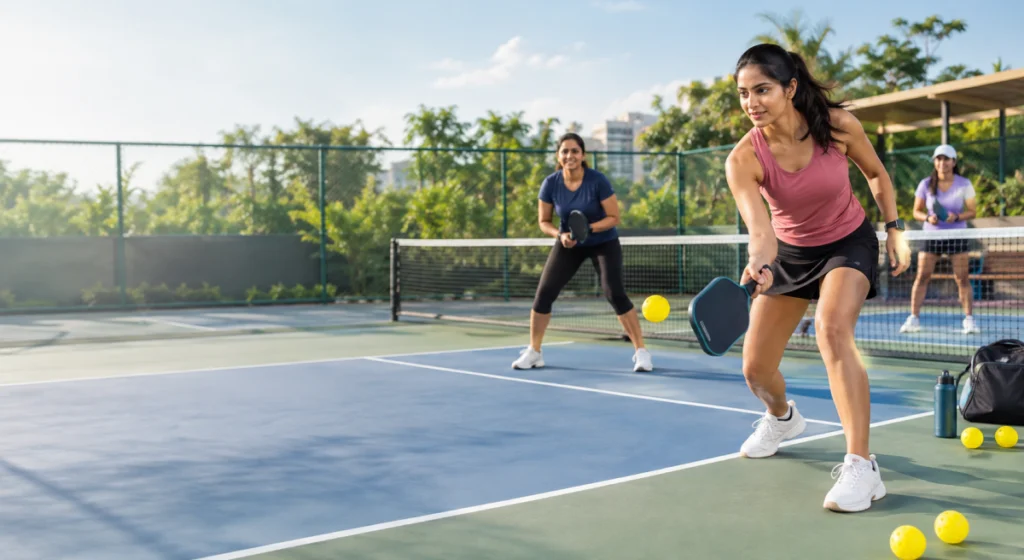
Ask a few women who have picked up a paddle for the first time, and you’ll hear the same thing: “I didn’t expect to enjoy it this much.” Pickleball for women has a way of pulling people in quickly, and the reasons are simple.
The learning curve is gentle. The court is small, the ball moves slower than a tennis ball, and the rules can be understood in one afternoon. Most beginners are rallying within their first session, which is a big part of why the game feels friendly rather than intimidating.
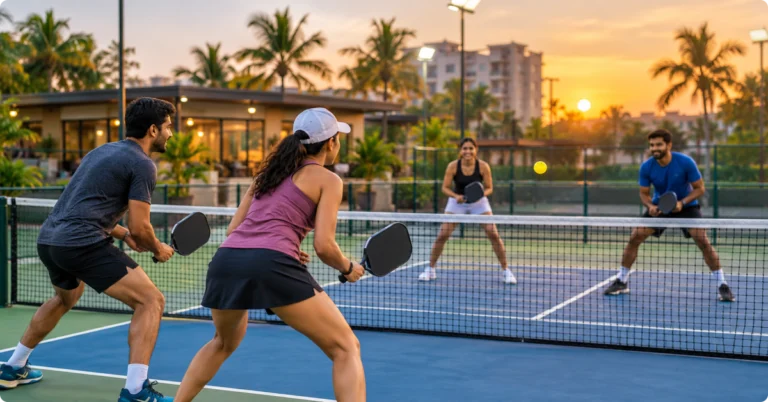
It’s also a social sport. Most games are played as doubles, so you’re always sharing the court with a partner and chatting between points. Many women say they came for the exercise and stayed for the people.
Then there’s flexibility. You can play casually on a weekend morning, or you can train seriously and enter tournaments. The same game works for a college student, a working professional, a mother of two, and a grandmother who wants to stay active. Different age groups can genuinely share a court.
Pickleball is also gaining attention across the country. Pickleball sports in India are still young compared to cricket or badminton, but more courts, clubs and community groups are appearing, and more people are looking for a way in.
To be realistic, pickleball isn’t effortless. You’ll misjudge a few balls, and you’ll forget the score at least once. That’s normal, and this guide will help you get through it. We’ll cover the basics, equipment, benefits, practical tips and how to find your community.
How to Get Started With Pickleball as a Beginner
If you’re wondering how to play pickleball, start with the big picture. Pickleball blends elements of tennis, badminton and table tennis. You hit a perforated plastic ball over a low net using a solid paddle. If you’d like a deeper background, read our page on [What is Pickleball].
The Court
A pickleball court is 20 feet wide and 44 feet long, the same size as a doubles badminton court. The net is 36 inches high at the sides and 34 inches in the middle. Compared to tennis, there’s much less ground to cover, which suits beginners well.
Near the net on each side is the non-volley zone, known as the “kitchen.” It extends 7 feet from the net.
Singles vs Doubles
Both formats are played, but doubles is far more common, especially for beginners. It’s less tiring, more social, and easier to learn because you and your partner cover the court together. Singles is a bigger workout and needs more movement, so many players try it after they’re comfortable with the basics.
Pickleball Rules for Beginners
You don’t need to memorize everything before your first game. These are the essentials:
- Serving: The serve is underhand. You hit the ball below waist level and send it diagonally across the court.
- Two-bounce rule: After the serve, the receiving team must let the ball bounce once. Then the serving team must also let it bounce once. After those two bounces, players can volley (hit the ball before it bounces).
- The kitchen rule: You can’t hit a volley while standing in the non-volley zone. You can step in to hit a ball that has already bounced, but you can’t hit it out of the air there.
- Scoring: Only the serving side can score points. Games are commonly played to 11, and you must win by 2. In doubles, each player on a team gets a turn to serve before the serve passes to the other side. Your first games will probably involve someone calling out the score before each serve, and that’s completely normal.
- Faults: Hitting the ball into the net, out of bounds, or volleying from the kitchen ends the rally.
What to Expect in Your First Few Games
You’ll probably feel a little clumsy at first. Most beginners hit the ball too hard, stand too far back, and forget the two-bounce rule at least once. Everyone else on the court has been there.
Some common beginner mistakes:
- Trying to smash every ball instead of keeping it in play
- Stepping into the kitchen while volleying
- Forgetting whose turn it is to serve
- Gripping the paddle too tightly
Don’t worry about winning. Aim to keep the ball in play and understand the flow of the game. Pickleball India communities are usually welcoming to newcomers, and experienced players often happily explain the rules.
Choosing the Right Pickleball Paddle for Women
Let’s clear up something first. Women don’t necessarily need a paddle marketed as a “women’s paddle.” The best pickleball paddle for women is simply the one that suits you: your strength, hand size, comfort, playing style and experience. Some women prefer a lighter paddle, some prefer a heavier one, and neither is wrong.
Choosing the right pickleball paddle for women is important for comfort, control and confidence. Whether you are a beginner or an experienced player, selecting a suitable pickleball paddle based on weight, grip size and playing style can improve your overall performance.
A good pickleball paddle plays an important role in improving your game. When selecting a pickleball paddle, consider its weight, grip size, material and balance. Beginners should generally look for a comfortable paddle that offers good control and a forgiving sweet spot.
Fiberglass paddles can provide a lively feel and power, while carbon fiber paddles are popular among players looking for better control and spin. Always choose a paddle that matches your playing style and comfort level.
It’s also worth checking whether a paddle meets the relevant equipment requirements if you plan to participate in organized or competitive play. USA Pickleball maintains equipment standards and an approved paddle list that players can use to check paddle specifications and approved models.
Here’s what to consider.
Paddle Weight
Paddles generally fall into three ranges:
- Lightweight (under about 7.3 oz): Easier to maneuver and quicker at the net, but they can feel less stable and produce less power.
- Midweight (about 7.3 to 8.4 oz): A good balance of control and power, and the most popular range.
- Heavyweight (over about 8.4 oz): More power and stability, but they can tire your arm and wrist over long sessions.
For most beginners, a lightweight or midweight paddle is a comfortable starting point. If your wrist or elbow feels sore after a session, a paddle that’s too heavy could be the reason.
Paddle Shape
- Standard shape: Wider and shorter, with a larger sweet spot. It’s forgiving and good for beginners.
- Elongated shape: Longer and narrower, offering more reach and power but a smaller sweet spot.
- Hybrid shape: A blend of the two.
A pickleball paddle for beginners is usually easier to use in a standard or hybrid shape, since it forgives off-center hits.
Grip Size and Handle Length
Grip size matters more than many new players realize. A grip that’s too small makes you squeeze harder, and one that’s too big limits wrist movement. Most paddles have grips of roughly 4 to 4.5 inches in circumference. If you’re unsure, hold the paddle as if shaking hands. There should be enough room to slide a finger between your fingertips and palm.
Handle length affects reach and two-handed backhand comfort. Longer handles help players who use a two-handed backhand.
Paddle Materials
The face of the paddle is typically made from one of these:
- Fiberglass: Generally offers more power and a livelier feel. It’s often more affordable and can be a good choice for beginners.
- Carbon fiber: Typically gives more control, a firmer feel and better spin potential. Many players consider it a step up.
Paddle cores are often made from polypropylene honeycomb, which is quiet, durable and good for control.
Control vs Power, Spin, Sweet Spot and Balance
As a beginner, prioritize control over power. You’ll improve faster if the ball goes where you want it to. Spin becomes useful later. A large sweet spot helps with consistency, and a head-light or balanced paddle is easier on your wrist.
Durability is worth checking too. Look at the edge guard, the quality of the face and the grip. A paddle that chips, delaminates or loses its grip quickly won’t serve you well.
Buying a Paddle in India
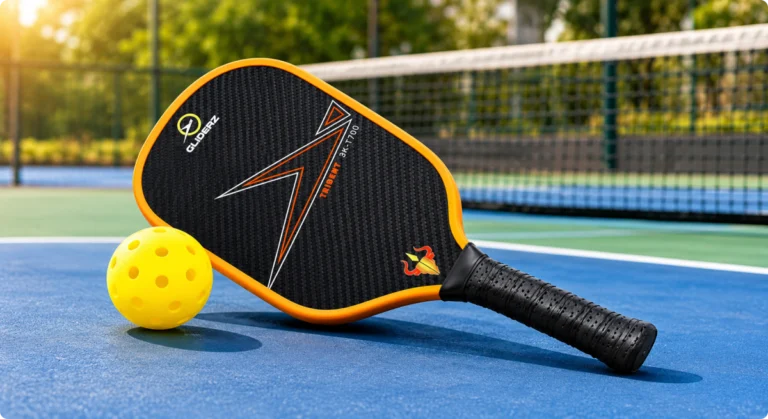
If you’re looking for a pickleball paddle in India, start by focusing on comfort, quality, and the features that suit your playing style rather than flashy claims. GLIDERZ is an Indian pickleball equipment brand designed with Indian players in mind. Before choosing a paddle, compare factors such as weight, shape, grip size, materials, balance, power, and control to find the option that feels right for you.
Pickleball India is attracting more players, especially women who want to enjoy an active and social sport. With the growing popularity of pickleball sports in India, more clubs and communities are encouraging women to participate.
If possible, try holding a paddle before buying to check whether the weight and grip feel comfortable in your hand. If you plan to buy a pickleball paddle in India online, carefully check the paddle’s weight, grip size, shape, and construction materials before placing your order.
Pickleball Balls, Shoes and Other Equipment Women Need
Beyond the paddle, beginner pickleball equipment is fairly minimal. Here’s what to get.
Pickleball Balls
Pickleball balls are hollow plastic balls with holes. The two main types are:
- Indoor balls: Softer, slightly lighter, with larger holes (often 26). They bounce lower and are designed for smooth indoor floors.
- Outdoor balls: Harder, with smaller and more numerous holes (often 40). They’re built to handle wind, rough surfaces and heat.
Ball quality matters more than most beginners expect. A ball with an inconsistent bounce makes it harder to judge shots, which can be frustrating when you’re still learning. A good ball should have a predictable bounce, hold its shape, and last through repeated play.
In India, conditions vary widely. You might play on an indoor badminton-style court in one city and an open-air court in another, where heat and sun are a factor. Match your ball to your surface, and expect outdoor balls to wear more quickly on rough courts.
If you’re searching for a pickleball ball India players can rely on, or the best Pickleball ball India offers for your court type, look for consistency, durability and the right indoor/outdoor rating. If you run a club, academy or community group, you may want to buy bulk pickleball ball packs to save money and keep sessions running smoothly. You can [Explore Pickleball Balls] from GLIDERZ.
Pickleball Shoes
Can you play in running shoes? Technically yes, but it isn’t ideal. Running shoes are built for forward motion. Pickleball involves quick side-to-side steps, sudden stops and pivots.
Look for pickleball shoes for women or court shoes with:
- Lateral support to help your foot stay stable when moving sideways
- Good grip for quick changes of direction, and suited to your court surface
- Cushioning to absorb impact on hard courts
- Stability through the midsole and heel
Poor footwear is a common reason for slips and rolled ankles. If you’re only choosing one piece of gear to invest in after the paddle, make it your shoes. Indoor and outdoor courts can call for slightly different soles, so consider where you’ll play most.
Other Pickleball Accessories
You don’t need much more, but a few extras make a difference:
- Comfortable sports clothing: Breathable, stretchable fabrics that let you move freely. In India’s heat, lighter colors and moisture-wicking fabrics help.
- Socks: Cushioned sports socks reduce blisters.
- Water bottle: Staying hydrated matters, especially outdoors.
- Pickleball bag: Keeps your paddle, balls and essentials together.
- Overgrips: Cheap, easily replaced, and helpful if your palms sweat.
- Towel: Handy for wiping your hands and paddle grip.
- Protective accessories: A cap or visor and sunscreen for outdoor play. Some players use sweatbands, and some choose protective eyewear.
Skip the temptation to buy everything at once. Start with a paddle, balls, comfortable shoes and water, then add the rest as you play more.
Pickleball Benefits for Women: Fitness, Social Connection and Confidence
The pickleball benefits for women tend to go beyond exercise. Here are the ones players often talk about. Individual results depend on how often you play, how hard you play, your fitness level and your overall lifestyle, so treat these as possibilities rather than promises.
Physical activity: Pickleball keeps you moving. Rallies involve short bursts of walking, stepping and reaching, which can add up to moderate cardiovascular activity, depending on how intensely you play.
Agility, balance and coordination: Reacting to a moving ball and adjusting your feet trains coordination. With regular play, many players notice their footwork and hand-eye coordination improving.
Reaction time: The quick exchanges at the net, called “hands battles,” encourage fast reactions.
Social interaction: This is the one most players mention first. Because it’s usually played in doubles, you naturally chat with partners and opponents. It’s easy to make friends, and many players find they look forward to their sessions.
Recreational enjoyment: Pickleball is fun. If exercise feels like a chore, a game that feels like play can make it easier to show up.
Confidence: Learning a new skill, even a small one like a consistent serve, can boost your sense of achievement. Many women say it feels good to try something new and improve visibly over a few weeks.
A regular exercise habit: Playing with friends or a group gives you a schedule and accountability, which helps you stay consistent.
Pickleball can also feel approachable if you’re new to racket or paddle sports. The court is small, the ball is slower than in tennis, and you don’t need to swing hard. If you’ve been nervous about trying a sport because you don’t feel “athletic,” pickleball is a friendly place to start. If you have a medical condition or an injury, check with your doctor before beginning any new exercise routine.
Beginner Tips to Improve Your Pickleball Game
These pickleball tips for beginners are ones you can use in your very first games.
- Learn the basic rules first. Knowing the two-bounce rule, kitchen rule and scoring keeps games smooth and stops small confusions from spoiling your fun.
- Focus on control before power. A slow, accurate ball beats a hard shot that lands out. Power comes later.
- Use a comfortable paddle. If your paddle feels heavy or awkward, you’ll struggle. Pick one that suits your grip and strength.
- Learn the correct grip. Most beginners use the continental or eastern grip. Hold the paddle relaxed, not tight. A tense grip leads to stiff swings.
- Stay balanced. Keep your knees slightly bent, weight on the balls of your feet, and paddle up in front of you. This is your “ready position.”
- Watch the ball carefully. Follow it all the way to your paddle. It sounds obvious, but most missed shots come from looking away too early.
- Practice your serve. It’s the one shot you fully control. A consistent, deep serve gives you a solid start to every point.
- Learn basic dinking. A dink is a soft shot that lands in your opponent’s kitchen. It’s a core skill and helps you win points patiently rather than by force.
- Communicate with your doubles partner. Call “mine” or “yours,” and agree on who takes shots down the middle. A little talking prevents a lot of collisions.
- Avoid standing too close to the baseline unnecessarily. After the serve and return, work your way toward the kitchen line. That’s where most points are decided.
- Wear appropriate court shoes. Better traction and support mean more confidence in your movement.
- Practice consistently. Two or three shorter sessions per week usually help more than one long one. Pick one skill per session, such as serves or dinks, rather than trying to fix everything.
Don’t try to master all twelve at once. Choose two or three, work on them for a week, then add more. Good pickleball training for beginners is patient and simple.
Building Confidence and Finding Your Pickleball Community in India
Once you’ve played a few times, the next question is how to keep going. Here are practical ways to build momentum.
Pickleball India is gaining popularity as more women discover this exciting paddle sport. From beginners to experienced players, women across different age groups are showing interest in learning and playing pickleball. Sports clubs, local communities and training academies are creating more opportunities for women to participate in friendly matches and competitive tournaments.
With the growing interest in pickleball, women can now explore new fitness activities, develop their skills and connect with other players. Choosing the right equipment and joining a beginner-friendly community can make the journey more enjoyable.
Join beginner sessions. Many clubs and communities run beginner-friendly sessions or open play for newer players. These are a comfortable place to learn without feeling pressured.
Play doubles. It’s more forgiving, more social and a great way to learn positioning and communication.
Find local pickleball communities. Interest in pickleball in India is growing, and players are forming groups in many cities through sports clubs, apartment complexes, social media groups and messaging communities. Search for local groups and ask at nearby badminton or tennis venues, since some have started offering pickleball. Availability varies by city, so be prepared to ask around.
Take beginner coaching. A few lessons with a coach can fix grip, footwork and serve mistakes before they become habits. It’s often the fastest way to improve.
Practice regularly. Even casual practice with a friend, such as hitting dinks across the kitchen line, builds touch and consistency.
Try recreational games. Friendly matches teach you more about rhythm and strategy than drills alone.
Progress when you’re ready. If you enjoy the competitive side, you can explore local tournaments or ladder-style play later. If you prefer casual play, that’s perfectly fine too. There’s no required path.
Consistency matters more than intensity. Showing up regularly, even for an hour, will improve your game more than occasional marathon sessions.
If you have questions about equipment or want help choosing gear for your play style, you can [Contact GLIDERZ].
Frequently Asked Questions About Pickleball for Women
1.Is pickleball suitable for women who have never played a paddle sport? Yes. The court is small, the ball moves slower than in tennis, and the basic rules are easy to pick up. Many beginners start rallying in their first session. You don’t need prior racket experience. Start with a comfortable paddle, play doubles, and focus on keeping the ball in play rather than hitting it hard.
2.What is the best pickleball paddle for a beginner woman? There isn’t one best paddle for everyone. Look for a lightweight to midweight paddle with a comfortable grip and a forgiving sweet spot. Fiberglass paddles are often friendly to beginners, while carbon fiber can give more control. Test the feel if possible, and prioritize comfort over marketing labels or “women’s” branding.
3. How heavy should a pickleball paddle be for a beginner? Most beginners are comfortable with paddles between roughly 7.2 and 8.2 ounces. Lighter paddles are easier to move quickly but offer less power and stability, while heavier ones add power but can strain your arm. If your wrist or elbow feels sore after playing, try a lighter paddle or a different balance.
4.What equipment does a woman need to start playing pickleball? You need a paddle, pickleballs suited to where you play, and comfortable court shoes. Add breathable sports clothing, socks, and a water bottle. Useful extras include a bag, overgrips, a towel, and sun protection for outdoor games. Many beginners start with just the basics and add accessories as they play more.
5.Are pickleball shoes necessary? Not strictly, but they’re strongly recommended. Pickleball involves quick side-to-side movement, and running shoes aren’t designed for it. Court shoes give better lateral support, grip and stability, which lowers the chance of slips and ankle rolls. If you’re just trying the game once, regular sports shoes will do, but proper court shoes are worth it if you continue.
6.What is the difference between indoor and outdoor pickleballs? Indoor balls are softer and lighter with larger holes, and they bounce lower on smooth surfaces. Outdoor balls are harder with smaller, more numerous holes, which helps them handle wind and rougher courts. Using the right type improves bounce consistency and durability. Choose based on where you’ll mostly play.
7.Can women of different ages play pickleball? Yes. Pickleball is popular across age groups, from teenagers to older adults, and people often play together on the same court. You can adjust intensity to your fitness level, playing at a relaxed pace or pushing competitively. If you have health concerns, check with your doctor before starting.
8.Is pickleball difficult to learn? The basics are easy to learn, and most people grasp the rules quickly. Getting good takes practice, especially with dinking, serves and positioning. The good news is that the early stages are already enjoyable. Focus on consistency, play regularly, and consider a few beginner lessons to build good habits.
9.Where can I buy pickleball equipment in India? You can find pickleball equipment through sports stores, specialty retailers, and online. When buying, check the weight, grip size, materials and ball type. For paddles and balls from an Indian brand, you can visit the GLIDERZ Pickleball website. Clubs and groups can also ask about buying in bulk.
10.How often should a beginner practice pickleball? Two to three sessions per week is a realistic and effective starting point. Shorter, regular sessions of around an hour usually work better than one long weekly session. Listen to your body, rest when needed, and focus on one or two skills at a time instead of trying to fix everything.
Conclusion
Pickleball for women is a practical, welcoming sport. It’s easy to learn, social, adaptable to different fitness levels and ages, and genuinely fun. You can play casually or competitively, and you can start at almost any point in life.
If you’re just beginning, focus on comfort and fundamentals. Learn the basic rules, keep the ball in play, and worry about power later. Choose equipment that suits your body and your game: a comfortable paddle, the right pickleballs for your court, and proper court shoes. You don’t need the most expensive gear, just gear that fits.
Start gradually, play with friends or a local group, and give yourself time to improve. The best part of pickleball is that you’ll enjoy it long before you feel “good” at it.
👉 “Looking to start playing? Explore GLIDERZ Pickleball paddles – Made in India for Indian players.”